
Backbend · Beginner
Bridge Pose
Setu Bandha Sarvangasana·सेतु बन्ध सर्वाङ्गासन·setu bandha sarvāṅgāsana
Also called: Setu Bandhasana, Supported Bridge
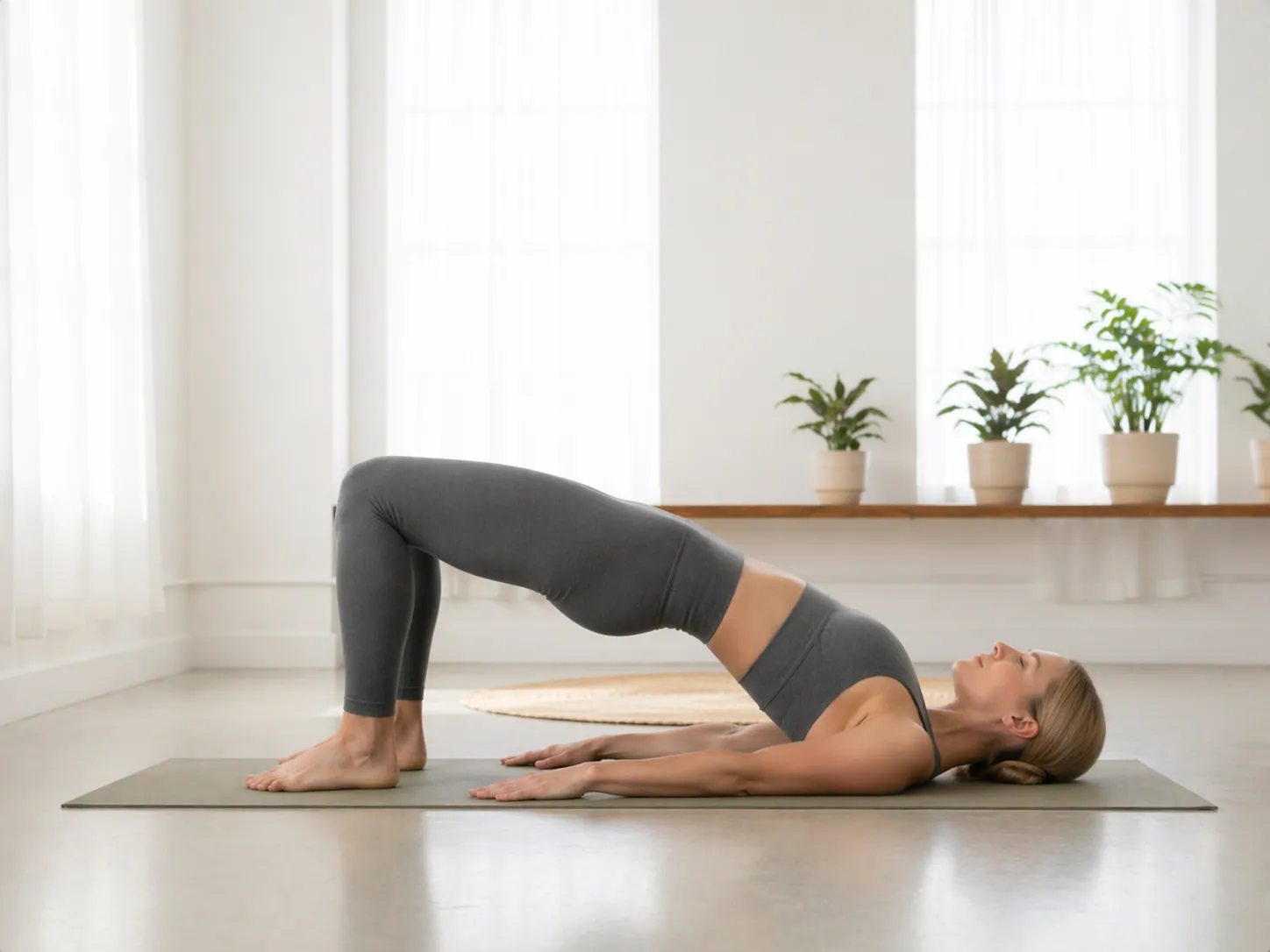
Bridge is the most flexible pose in our catalog — it works as energizing morning practice (active, lifted) or as deeply restorative evening practice (supported on a block). Useful when you want spine-extension benefits without committing to a deeper backbend. The supported variant before bed is reliably better than a sleeping pill.
Benefits
- Strengthens the glutes, hamstrings, and posterior chain
- Opens the chest and front-line, counter-balancing forward-head posture
- Mild inversion — the heart sits above the head, supporting calm focus
- The supported variation (block under sacrum) is one of the most reliable evening stress-relief poses
How to practise Bridge Pose
- Lie on your back on a soft surface.
- Bend both knees and place the feet flat on the floor, hip-width apart.
- Bring the heels close to your sit bones — close enough that your fingertips just brush the heels.
- Rest the arms by your sides, palms down.
- Inhale and press the feet firmly into the floor. Lift the hips toward the ceiling.
- Roll the shoulders under and clasp the hands beneath you, OR keep palms down.
- Lift the chest toward the chin (not the chin toward the chest). For the restorative variant: rest a yoga block under the sacrum.
Suggested hold: 60s · Breath: Paced
How Bridge Pose affects your doshas
In Ayurveda the same pose lands differently depending on your constitution. This is the lens the app uses to sequence your practice.
| Dosha | Effect | Notes |
|---|---|---|
| Vata | Balancing | a good fit — helps settle this dosha |
| Pitta | Neutral | broadly neutral |
| Kapha | Balancing | a good fit — helps settle this dosha |
Balance it off the mat, too
Poses and food are two sides of the same balance. Calm the same dosha on your plate:
Who should avoid or modify this pose
- Pregnant women shouldn't lie flat on the back past the first trimester
- Don't practice with a recent neck injury — never turn the head while in the pose
- Avoid with active herniated disc or severe lower-back pain
- Skip if you have severe acid reflux that worsens lying flat
If you're pregnant, injured, or managing a condition, check with a qualified teacher or clinician before practising.
Modifications
- Place a yoga block under the sacrum (supported bridge) for a fully passive restorative version
- Keep the arms by the sides if rolling onto the shoulders is uncomfortable
- Squeeze a block between the inner thighs to engage without straining
- Reduce the lift if the lower back feels pinched — height is not the goal
Traditional source: Modern hatha — Modern hatha asana. Often taught as the accessible alternative or preparation for Sarvangasana (which itself is a modern derivation of the Hatha Yoga Pradipika Viparita Karani mudra family).