
Standing · Intermediate
Dancer's Pose
Natarajasana·नटराजासन·naṭarājāsana
Also called: Lord of the Dance, Standing Bow
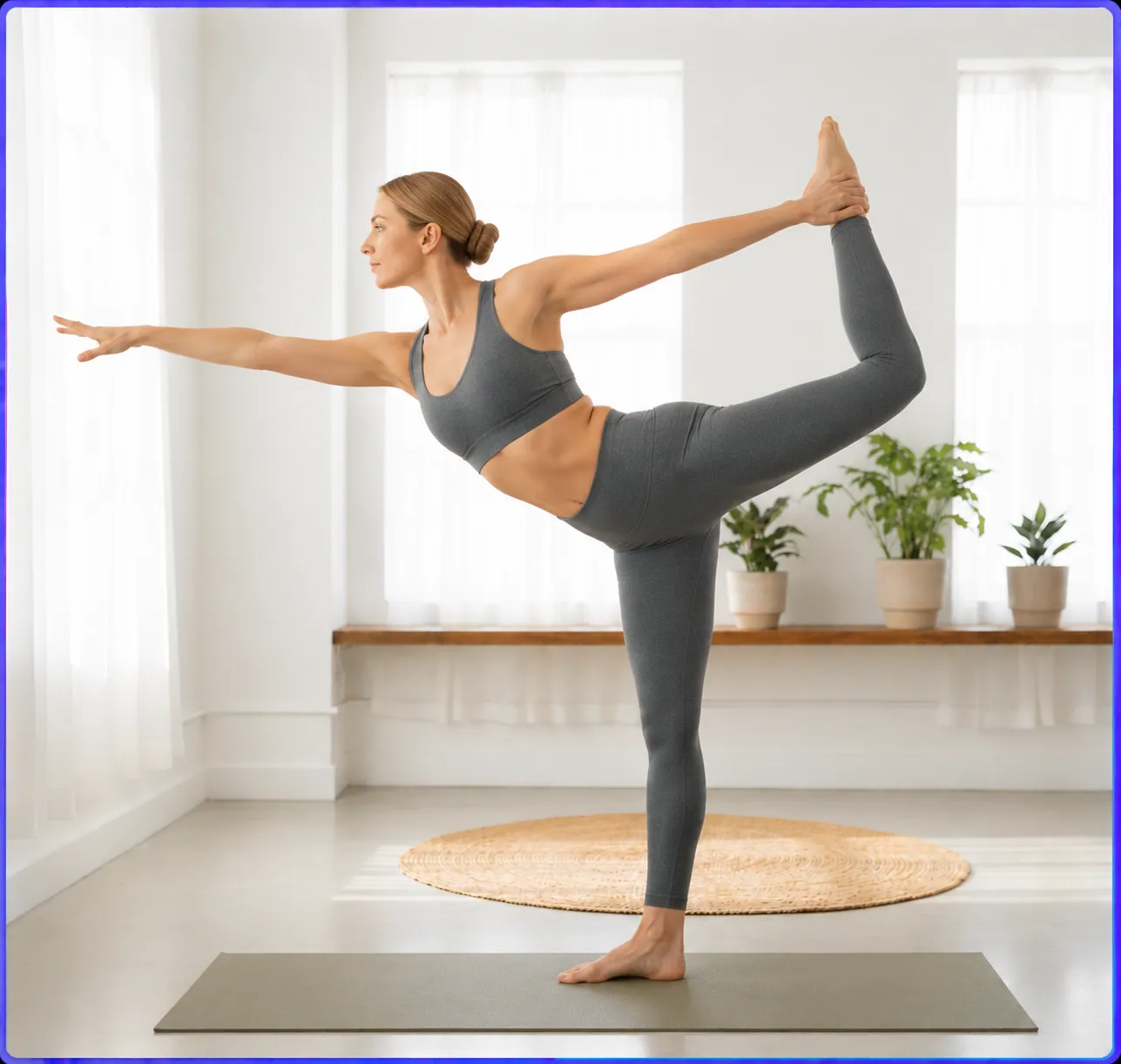
Dancer's is one of the few poses that combines almost every standing-asana skill — balance, flexibility, strength, and backbend. Save it for users who already have steady Vrksasana and Trikonasana. Use a strap; the foot-grab is theatrical not therapeutic.
Benefits
- Combines balance + backbend + hip-flexor stretch in one shape
- Opens the front of the standing-leg's hip in a dynamic way
- Concentration + endurance — the pose teaches sustained focus
- Generates cardiovascular response without aerobic work
How to practise Dancer's Pose
- Stand on both feet, weight even.
- Shift your weight onto the left foot. Slightly bend the left knee for stability.
- Bend the right knee and lift the right foot behind you.
- Reach back with the right hand and grasp the right ankle from the inside. (Use a yoga strap looped around the foot if your hand can't reach.)
- Reach the left arm forward at shoulder height as a counterbalance.
- Press the right foot back into the right hand, lifting the leg up and back behind you.
- Open the chest forward. Find your gaze on a still spot. Switch sides.
Suggested hold: 30s · Breath: Natural
How Dancer's Pose affects your doshas
In Ayurveda the same pose lands differently depending on your constitution. This is the lens the app uses to sequence your practice.
| Dosha | Effect | Notes |
|---|---|---|
| Vata | Neutral | broadly neutral |
| Pitta | Caution | can aggravate this dosha — practise sparingly |
| Kapha | Balancing | a good fit — helps settle this dosha |
Balance it off the mat, too
Poses and food are two sides of the same balance. Calm the same dosha on your plate:
Who should avoid or modify this pose
- Don't practice with severe lower-back injury
- Skip with shoulder injury that limits external rotation
- Pregnant women shouldn't practice — the backbend depth and balance demand are not safe
- Avoid with severe high blood pressure
- Skip with vertigo or balance disorders
If you're pregnant, injured, or managing a condition, check with a qualified teacher or clinician before practising.
Modifications
- Use a yoga strap around the lifted foot if the hand can't reach
- Practice next to a wall, fingertips touching for balance
- Reduce the depth — keep the chest closer to upright if the lower back complains
- Beginner variant: hold the lifted foot but skip the press-back-and-up motion
Traditional source: Modern hatha — Modern hatha, named for Nataraja (Shiva as cosmic dancer). Not in the Hatha Yoga Pradipika Ch. 1.