
Standing · Intermediate
Hand-to-Big-Toe Pose
Utthita Hasta Padangusthasana·उत्थित हस्त पादाङ्गुष्ठासन·utthita hasta pādāṅguṣṭhāsana
Also called: Standing Hand-to-Big-Toe
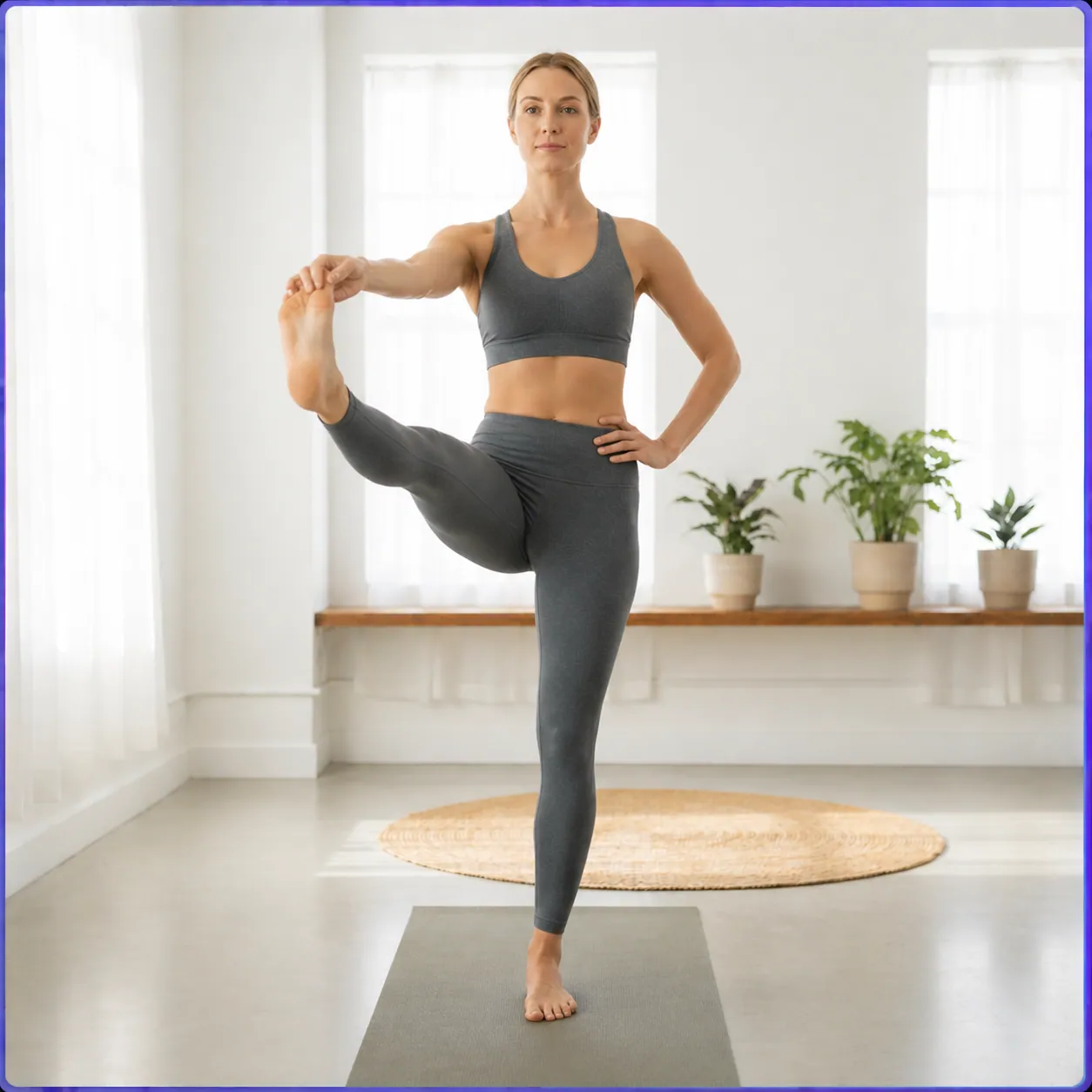
This pose teaches that flexibility without strength is performance, and strength without flexibility is rigidity — you need both. Use the strap, don't fight for the toe; the strap doesn't make this an easier pose, it just makes the right one possible.
Benefits
- Combines balance + flexibility + core strength in a single demanding shape
- Deep hamstring stretch with active engagement (better than passive folds for tight users)
- Trains the standing leg's full proprioceptive system
- Develops the focused gaze needed for inversions and arm balances
How to practise Hand-to-Big-Toe Pose
- Stand on both feet with weight even.
- Shift all your weight onto the left foot. Slightly bend the standing knee for balance.
- Lift your right knee toward your chest until the thigh is parallel to the floor.
- Loop a yoga strap around the ball of the right foot, holding both ends with the right hand. (Or hook the big toe with the index and middle fingers.)
- Slowly extend the right leg straight forward. Lengthen the spine tall.
- Keep shoulders relaxed and gaze straight ahead.
- The lifted leg doesn't need to straighten — height isn't the goal, length is. Switch sides.
Suggested hold: 30s · Breath: Natural
How Hand-to-Big-Toe Pose affects your doshas
In Ayurveda the same pose lands differently depending on your constitution. This is the lens the app uses to sequence your practice.
| Dosha | Effect | Notes |
|---|---|---|
| Vata | Neutral | broadly neutral |
| Pitta | Neutral | broadly neutral |
| Kapha | Balancing | a good fit — helps settle this dosha |
Balance it off the mat, too
Poses and food are two sides of the same balance. Calm the same dosha on your plate:
Who should avoid or modify this pose
- Don't practice with severe lower-back injury
- Skip with hamstring tear or severe sciatica
- Avoid with balance disorders without a wall behind you
- Pregnant women should use a wall and keep the lifted leg low
If you're pregnant, injured, or managing a condition, check with a qualified teacher or clinician before practising.
Modifications
- Use a yoga strap around the lifted foot if the hand can't reach the toe
- Keep the lifted knee bent — height isn't the goal, length is
- Practice with the back to a wall for balance support
- Easier variant: place the lifted foot on a chair seat in front of you
Traditional source: Modern hatha — Modern hatha. "Utthita" = extended, "hasta" = hand, "pāda-aṅguṣṭha" = big toe. Not in the Hatha Yoga Pradipika Ch. 1.