
Standing · Beginner
Pyramid Pose
Parsvottanasana·पार्श्वोत्तानासन·pārśvottānāsana
Also called: Intense Side Stretch
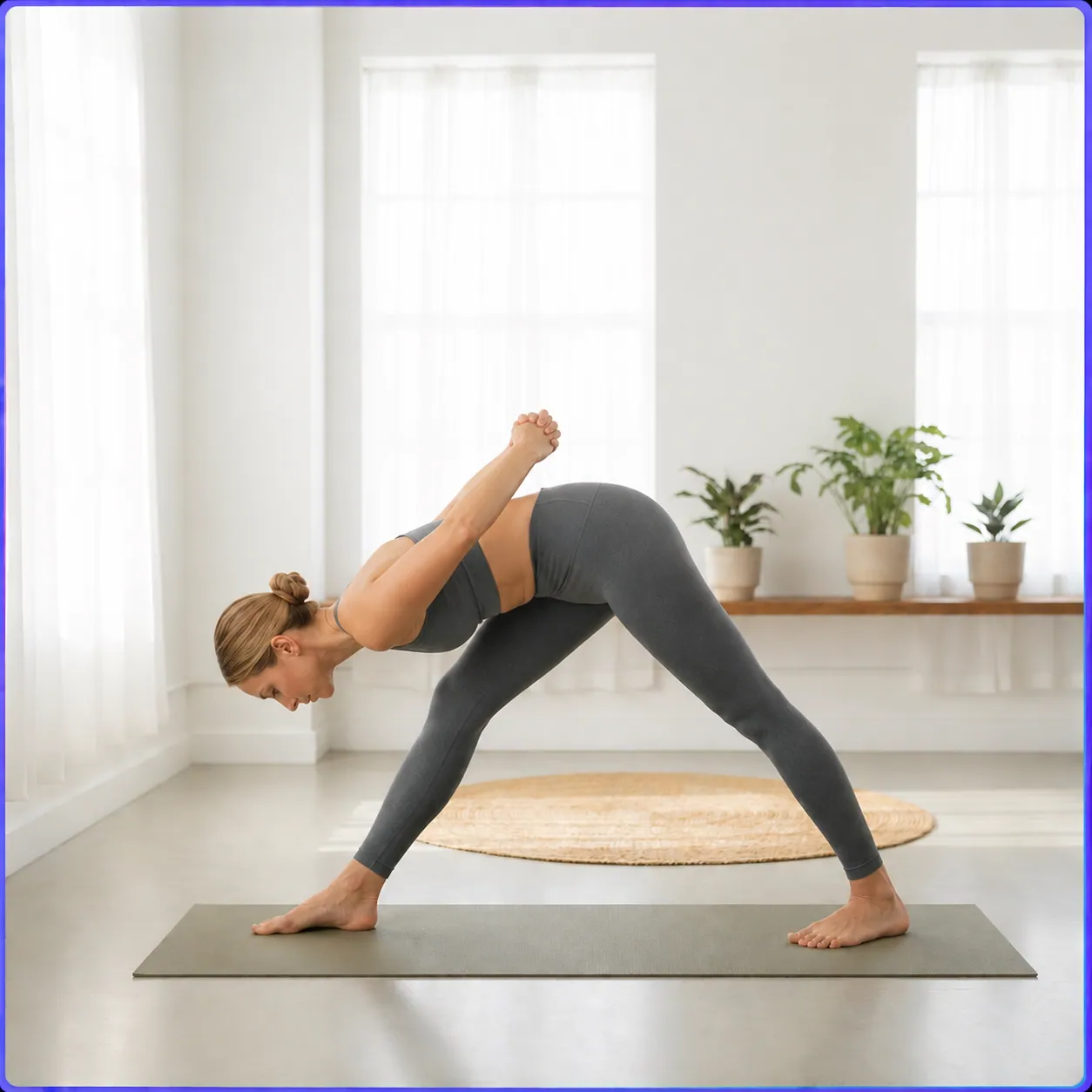
Pyramid is the standing forward fold with asymmetry — it isolates one leg's posterior chain at a time, which is more effective for users with one tighter side. Use blocks unconditionally; floor-reaching is not the practice.
Benefits
- Deep stretch of the front leg's hamstring
- Opens the back leg's hip flexor and inner thigh
- If using reverse prayer: opens the wrists, forearms, and shoulders
- Tighter focus than a standing forward fold — easier to track misalignment
How to practise Pyramid Pose
- Stand at the front of your mat, feet together.
- Step your left foot back about three feet. Both feet stay flat.
- Turn your back foot out slightly, around 45 degrees.
- Square your hips toward the front of the mat.
- Place your hands on your hips OR bring them into reverse prayer behind your back.
- Inhale and lengthen your spine tall.
- Exhale and hinge forward at the hips, lowering your chest over the front leg. Keep the front leg straight (or microbent). Switch sides.
Suggested hold: 45s · Breath: Paced
How Pyramid Pose affects your doshas
In Ayurveda the same pose lands differently depending on your constitution. This is the lens the app uses to sequence your practice.
| Dosha | Effect | Notes |
|---|---|---|
| Vata | Balancing | a good fit — helps settle this dosha |
| Pitta | Balancing | a good fit — helps settle this dosha |
| Kapha | Neutral | broadly neutral |
Balance it off the mat, too
Poses and food are two sides of the same balance. Calm the same dosha on your plate:
Who should avoid or modify this pose
- Pregnant women shouldn't fold deeply — keep a long spine and shallow hinge
- Don't practice with herniated disc or severe lower-back injury
- Avoid with very tight hamstrings that pull the lower back into rounding
- Skip with severe high blood pressure
If you're pregnant, injured, or managing a condition, check with a qualified teacher or clinician before practising.
Modifications
- Place blocks under the hands beside the front foot
- Bend the front knee generously to keep the spine long
- Hands on the hips throughout — skip the reverse prayer
- Practice with the back heel against a wall for stability
Traditional source: Modern hatha — Modern hatha. "Parsva" = side, "ut-tāna" = intense stretch. Not in the Hatha Yoga Pradipika Ch. 1.