
Forward Fold · Beginner
Seated Forward Bend
Paschimottanasana·पश्चिमोत्तानासन·paścimottānāsana
Also called: West-Stretching Pose, Intense Back Stretch
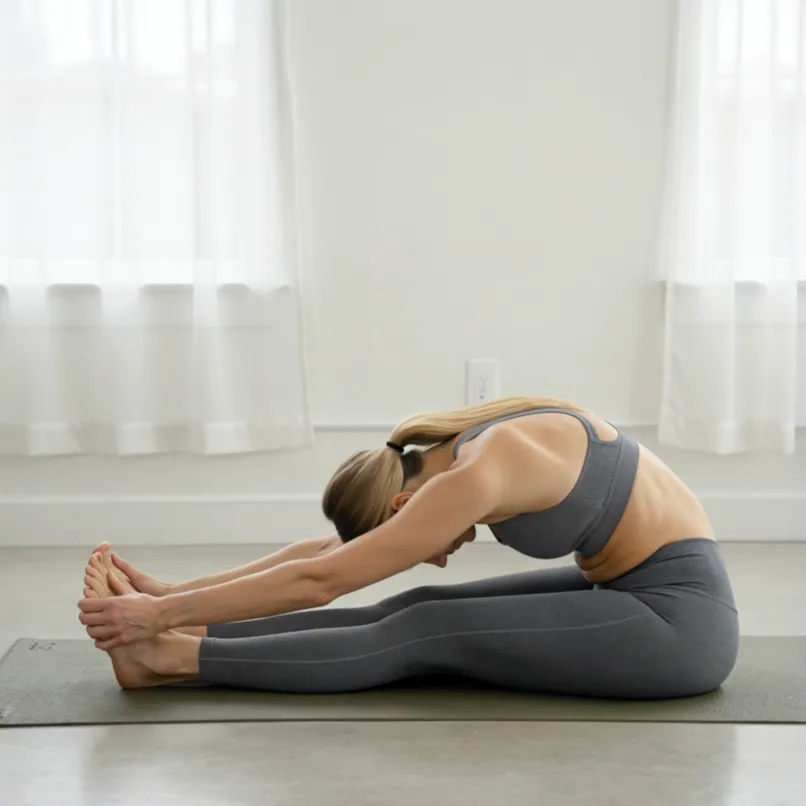
Paschimottanasana is the canonical pose for an overstimulated nervous system — wired-but-tired vata, late-evening anxiety, the wind-down before sleep. Hold it longer than feels comfortable to let the parasympathetic shift take hold.
Benefits
- Deeply stretches the hamstrings, calves, and entire posterior chain
- Compresses the abdomen — supports digestion and stimulates the kidneys
- Activates the parasympathetic response — direct anxiety relief
- the Hatha Yoga Pradipika describes it as moving prana up the central channel; modern reading: nervous-system regulation
How to practise Seated Forward Bend
- Sit on a folded blanket with both legs extended in front.
- Flex both feet so the toes point straight up.
- Engage the thighs gently — kneecaps lift.
- Inhale and lift both arms overhead, lengthening the spine.
- Exhale and hinge forward from the hips — not the waist.
- Reach for the shins, ankles, or feet — wherever you can hold without rounding the lower back.
- Bend the knees if hamstrings feel pulled. Use a strap around the feet if needed.
Suggested hold: 90s · Breath: Paced
How Seated Forward Bend affects your doshas
In Ayurveda the same pose lands differently depending on your constitution. This is the lens the app uses to sequence your practice.
| Dosha | Effect | Notes |
|---|---|---|
| Vata | Balancing | a good fit — helps settle this dosha |
| Pitta | Balancing | a good fit — helps settle this dosha |
| Kapha | Neutral | broadly neutral |
Balance it off the mat, too
Poses and food are two sides of the same balance. Calm the same dosha on your plate:
Who should avoid or modify this pose
- Pregnant women shouldn't fold deeply — practice with the legs apart instead
- Don't practice with a herniated disc or acute lower-back injury
- Avoid in the case of recent abdominal surgery
- If you have severe sciatica, skip or use a strap around the feet rather than reaching
If you're pregnant, injured, or managing a condition, check with a qualified teacher or clinician before practising.
Modifications
- Sit on a folded blanket to tilt the pelvis forward — most users need this
- Bend the knees as much as needed to keep the spine long
- Use a strap around the feet if the hands don't reach
- Place a bolster on the thighs to rest the chest down (restorative variant)
Traditional source: Hatha Yoga Pradipika 1.30-31 — Named explicitly in the Hatha Yoga Pradipika Ch. 1. The text describes it as awakening pranic flow along the spine.