
Restorative · Beginner
Corpse Pose
Savasana·शवासन·śavāsana
Also called: Mrtasana (alternate name in some texts)
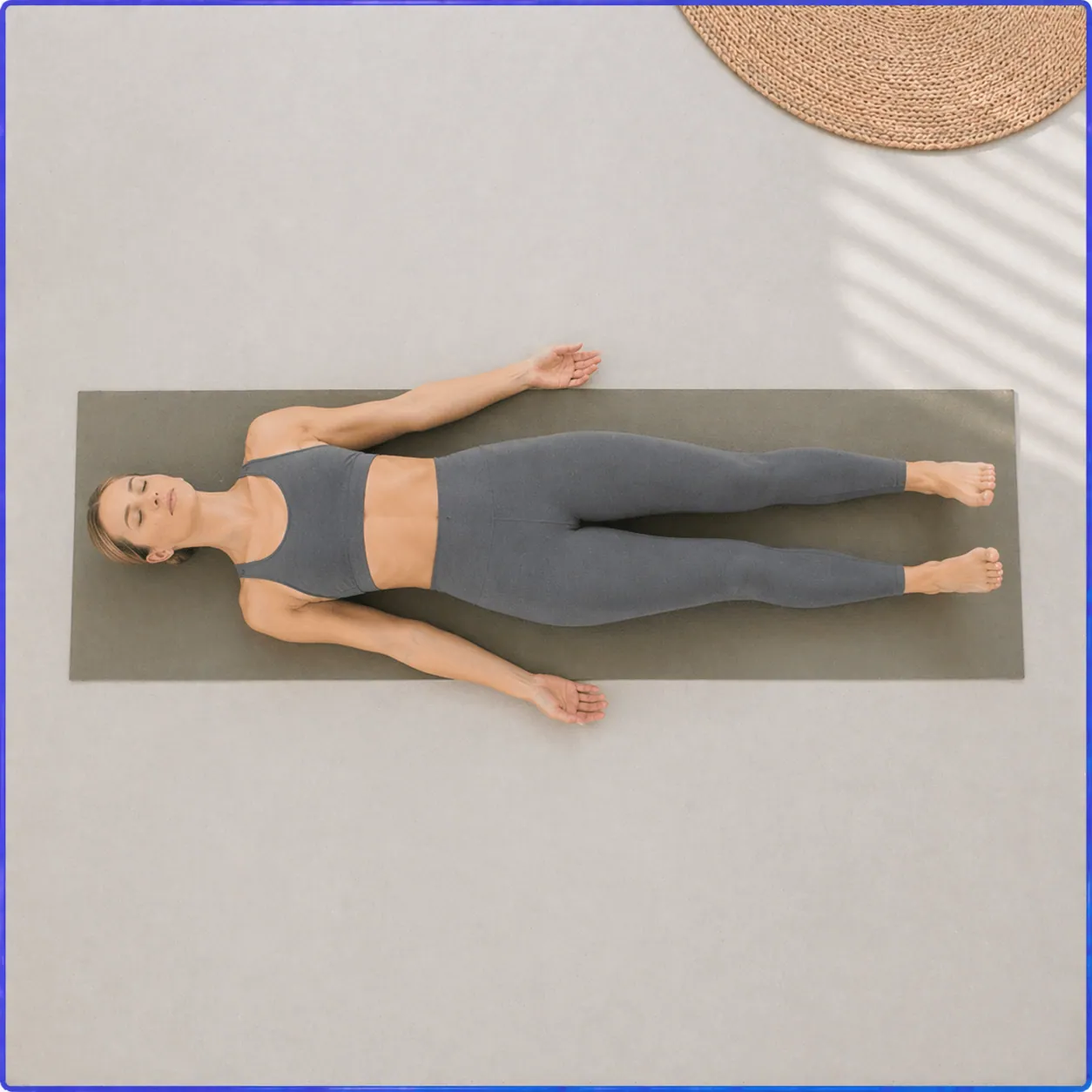
Savasana is the most important pose in any practice. The work the body did during the asanas only fully lands if you stop and let the system metabolize it. For users with insomnia, anxiety, or chronic overwhelm, a long Savasana before bed is the practice — everything else is preparation.
Benefits
- Activates a deep parasympathetic state — measurable drop in heart rate and blood pressure
- Allows the nervous system to integrate the effects of the preceding practice
- Reduces cortisol and supports recovery between physically demanding asanas
- Provides direct insomnia relief when held for 10+ minutes before bed
How to practise Corpse Pose
- Lie flat on your back on a soft surface.
- Let the feet fall open, slightly wider than the hips.
- Place the arms by your sides, palms facing up. Shoulders soften toward the floor.
- Close the eyes or soften the gaze toward the ceiling.
- Optional: place a folded blanket under the head or knees for support.
- Optional: cover the eyes with a soft cloth.
- Release all effort. Let the floor hold you completely. Rest here until the practice gently calls you back.
Suggested hold: 180s · Breath: Natural
How Corpse Pose affects your doshas
In Ayurveda the same pose lands differently depending on your constitution. This is the lens the app uses to sequence your practice.
| Dosha | Effect | Notes |
|---|---|---|
| Vata | Balancing | a good fit — helps settle this dosha |
| Pitta | Balancing | a good fit — helps settle this dosha |
| Kapha | Neutral | broadly neutral |
Balance it off the mat, too
Poses and food are two sides of the same balance. Calm the same dosha on your plate:
Who should avoid or modify this pose
- Pregnant women in the third trimester should lie on the left side instead of flat on the back
- Don't lie flat with severe acid reflux — prop the head and chest up
- If you have low back pain that worsens lying flat, place a bolster under the knees
- Skip the long hold after eating a heavy meal
If you're pregnant, injured, or managing a condition, check with a qualified teacher or clinician before practising.
Modifications
- Place a rolled blanket under the knees to release the lower back
- Cover the eyes with a soft cloth or eye pillow to deepen the parasympathetic shift
- Use a folded blanket under the head to support the cervical curve
- Practice on the side with a pillow between the knees if lying flat is uncomfortable
Traditional source: Hatha Yoga Pradipika 1.32 — Named explicitly in the Hatha Yoga Pradipika Ch. 1. The text describes a supine pose like a corpse, removing fatigue and quieting the mind.