
Restorative · Beginner
Child's Pose
Balasana·बालासन·bālāsana
Also called: Resting Pose
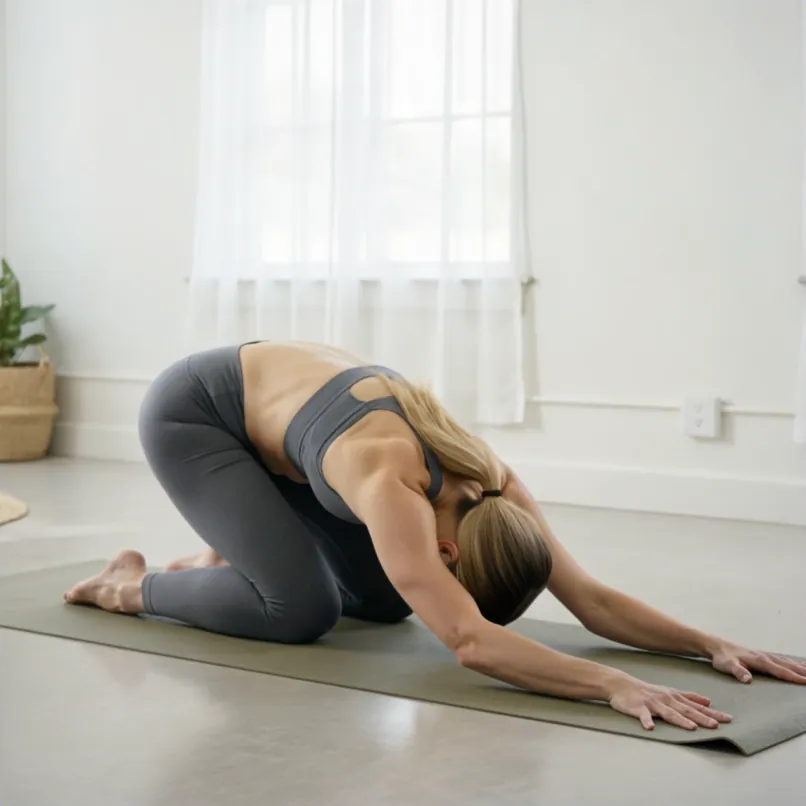
Balasana is the surrender pose. When the body has had enough — too much intensity, too much standing, too much thinking — return here and let the floor do the work. Especially useful as a recovery between strong asanas, or as a complete practice on a low-energy day.
Benefits
- Activates the parasympathetic nervous system — direct stress relief
- Releases the lower back, opening the lumbar spine in flexion
- Encourages diaphragmatic breathing into the back body
- Functions as a transition / reset between more demanding asanas
How to practise Child's Pose
- Come to your hands and knees on a soft surface.
- Bring the big toes together. Spread the knees as wide as feels comfortable.
- Sit the hips back toward the heels.
- Walk the hands forward and rest the forehead on the mat.
- Arms can extend forward or rest alongside the body, palms up.
- Soften the jaw. Soften the eyes.
- Breathe into the back of the rib cage. Each inhale expands the lower back outward.
Suggested hold: 120s · Breath: Natural
How Child's Pose affects your doshas
In Ayurveda the same pose lands differently depending on your constitution. This is the lens the app uses to sequence your practice.
| Dosha | Effect | Notes |
|---|---|---|
| Vata | Balancing | a good fit — helps settle this dosha |
| Pitta | Balancing | a good fit — helps settle this dosha |
| Kapha | Neutral | broadly neutral |
Balance it off the mat, too
Poses and food are two sides of the same balance. Calm the same dosha on your plate:
Who should avoid or modify this pose
- Pregnant women shouldn't compress the belly — separate the knees wide and place a bolster between the thighs
- Don't practice with a recent knee injury or meniscus tear
- Avoid with severe ankle injury — the tops of the feet press into the floor
- If you have high blood pressure, rest the forehead on stacked fists rather than the mat
If you're pregnant, injured, or managing a condition, check with a qualified teacher or clinician before practising.
Modifications
- Place a bolster lengthwise under the torso for full-restorative version
- Stack a folded blanket between the calves and thighs if the heels won't reach the hips
- Stack the fists under the forehead if the head doesn't reach the floor
Traditional source: Modern hatha — Modern restorative pose, not enumerated in the Hatha Yoga Pradipika Ch. 1. Universal across hatha lineages as a resting position.