
Restorative · Beginner
Legs Up the Wall
Viparita Karani·विपरीत करणी·viparīta karaṇī
Also called: Inverted Action, Wall Pose
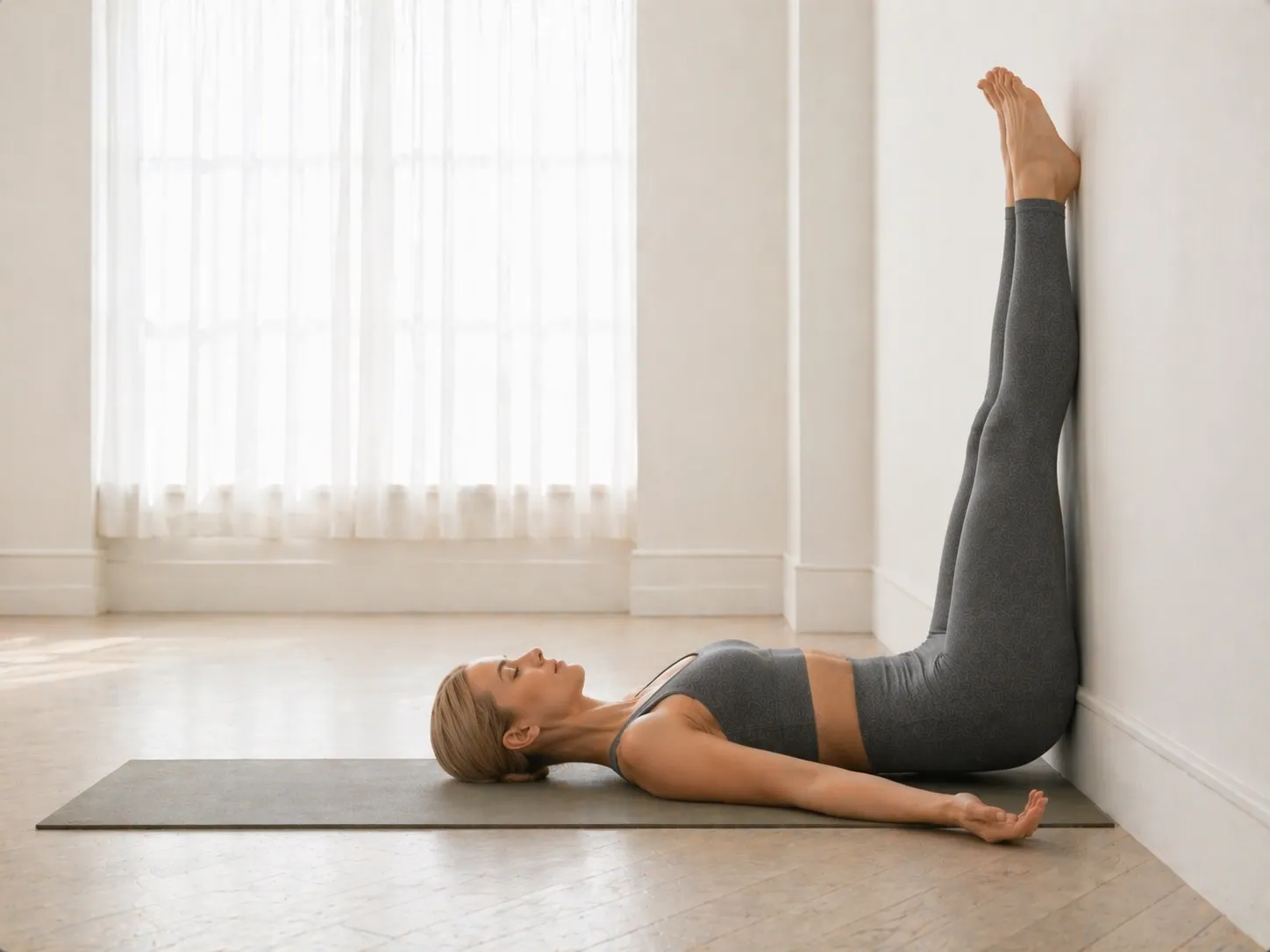
Legs Up the Wall is the ultimate effortless restorative. For users who say they 'can't relax' or 'can't sleep', this is the prescription. Five to fifteen minutes here, eyes covered, no music — the nervous system does the rest of the work itself.
Benefits
- Reverses venous return — drains fluid from the legs and reduces swelling
- Activates the parasympathetic nervous system — measurable drop in heart rate within minutes
- Releases the lower back and hamstrings without active stretching
- One of the most reliable pre-sleep poses for users with insomnia or racing thoughts at night
How to practise Legs Up the Wall
- Sit on the floor with your right hip touching a wall.
- Lower yourself onto your back and swing your legs up the wall as you turn your body 90 degrees.
- Scoot your hips as close to the wall as feels comfortable. They don't have to touch.
- Optional: place a folded blanket under your hips for a slight pelvic tilt.
- Rest your arms by your sides, palms up. Or one hand on the belly, one on the heart.
- Cover your eyes with a soft cloth or eye pillow if you have one.
- Soften everything. Rest here and let gravity do the work.
Suggested hold: 300s · Breath: Natural
How Legs Up the Wall affects your doshas
In Ayurveda the same pose lands differently depending on your constitution. This is the lens the app uses to sequence your practice.
| Dosha | Effect | Notes |
|---|---|---|
| Vata | Balancing | a good fit — helps settle this dosha |
| Pitta | Balancing | a good fit — helps settle this dosha |
| Kapha | Neutral | broadly neutral |
Balance it off the mat, too
Poses and food are two sides of the same balance. Calm the same dosha on your plate:
Who should avoid or modify this pose
- Pregnant women in the third trimester shouldn't lie flat on the back — practice on the side instead
- Don't practice during menstruation if you find inversions uncomfortable (cultural / personal preference, not strict medical)
- Avoid with severe glaucoma, recent retinal detachment, or untreated high blood pressure
- Skip during a severe headache or sinus congestion
- Don't practice with a recent neck injury
If you're pregnant, injured, or managing a condition, check with a qualified teacher or clinician before practising.
Modifications
- Place a folded blanket under the hips for a slight pelvic tilt (the classic Iyengar version)
- Move the hips a few inches away from the wall if hamstrings are tight
- Cover the eyes with a soft cloth or eye pillow to deepen the parasympathetic shift
- Bend the knees if straightening the legs is uncomfortable — keep the soles of the feet on the wall
Traditional source: Modern hatha 3.78-83 — Modern restorative pose. The original Hatha Yoga Pradipika 3.78-83 Viparita Karani is a mudra (not an asana) involving inversion to reverse the flow of bindu. We ship the simplified wall variant; the mudra itself is a stretch goal.