
Standing · Beginner
Standing Forward Fold
Uttanasana·उत्तानासन·uttānāsana
Also called: Standing Forward Bend, Rag Doll
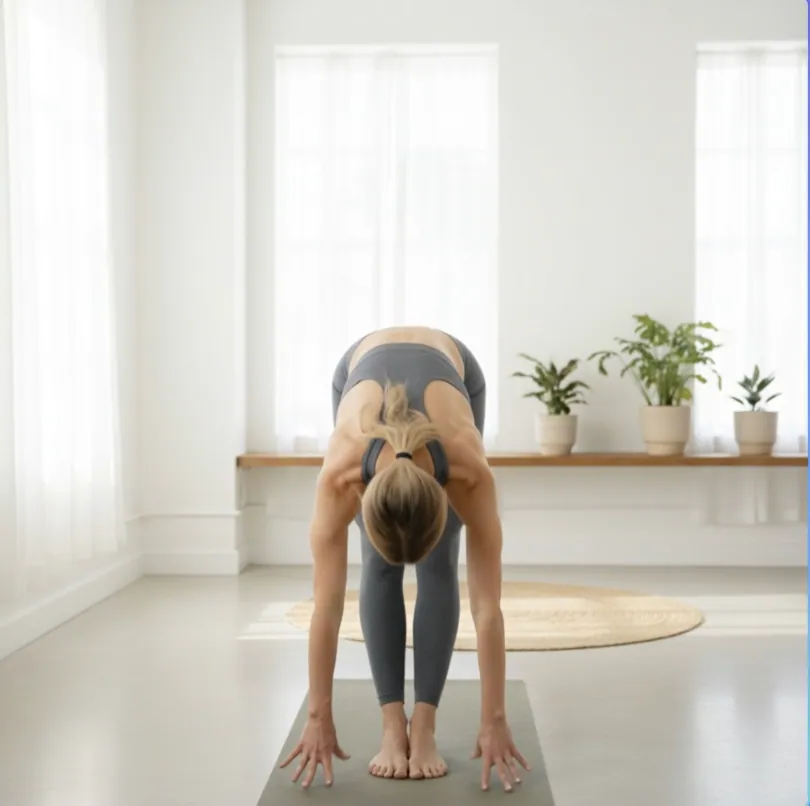
Uttanasana is the simplest reset for an overwound nervous system. The combination of head-below-heart (a mild inversion) and full posterior-chain release flips the user out of fight-or-flight in 60-90 seconds. Bend the knees liberally — there's no extra credit for straight legs.
Benefits
- Releases the entire posterior chain — hamstrings, calves, lower back
- Mild inversion calms the sympathetic nervous system
- Decompresses the spine through gravity-assisted lengthening
- Common entry into pranayama practice — a few minutes here before sitting helps the breath settle
How to practise Standing Forward Fold
- Stand with your feet hip-width apart at the front of the mat.
- Inhale and lift your arms overhead, lengthening the spine.
- Exhale and hinge forward from your hips, folding over the legs.
- Bend your knees as much as you need to. Straight legs are NOT the goal.
- Let your hands rest on shins, ankles, or the floor — wherever your back stays long.
- Let the head hang heavy. Soften the neck completely.
- Optional: hold opposite elbows and gently sway side to side.
Suggested hold: 60s · Breath: Paced
How Standing Forward Fold affects your doshas
In Ayurveda the same pose lands differently depending on your constitution. This is the lens the app uses to sequence your practice.
| Dosha | Effect | Notes |
|---|---|---|
| Vata | Balancing | a good fit — helps settle this dosha |
| Pitta | Balancing | a good fit — helps settle this dosha |
| Kapha | Neutral | broadly neutral |
Balance it off the mat, too
Poses and food are two sides of the same balance. Calm the same dosha on your plate:
Who should avoid or modify this pose
- Pregnant women shouldn't fold deeply — keep the legs apart and a long spine instead
- Don't practice with a herniated disc or acute lower-back injury
- Skip with severe sciatica or hamstring tear
- Avoid with very high blood pressure or detached retina
- If you have glaucoma, skip the head-below-heart position
If you're pregnant, injured, or managing a condition, check with a qualified teacher or clinician before practising.
Modifications
- Bend the knees as much as needed — straight legs are not the goal
- Rest the hands on yoga blocks if the floor is far
- Place a chair seat under the torso for a fully supported version
- Hold opposite elbows and let the upper body hang completely
Traditional source: Modern hatha — Modern standing forward fold. the Hatha Yoga Pradipika names Paschimottanasana (1.30-31), the seated version; Uttanasana is its standing-pose counterpart from modern hatha.