
Balance · Advanced
Crane Pose
Kakasana·काकासन·kākāsana
Also called: Crane
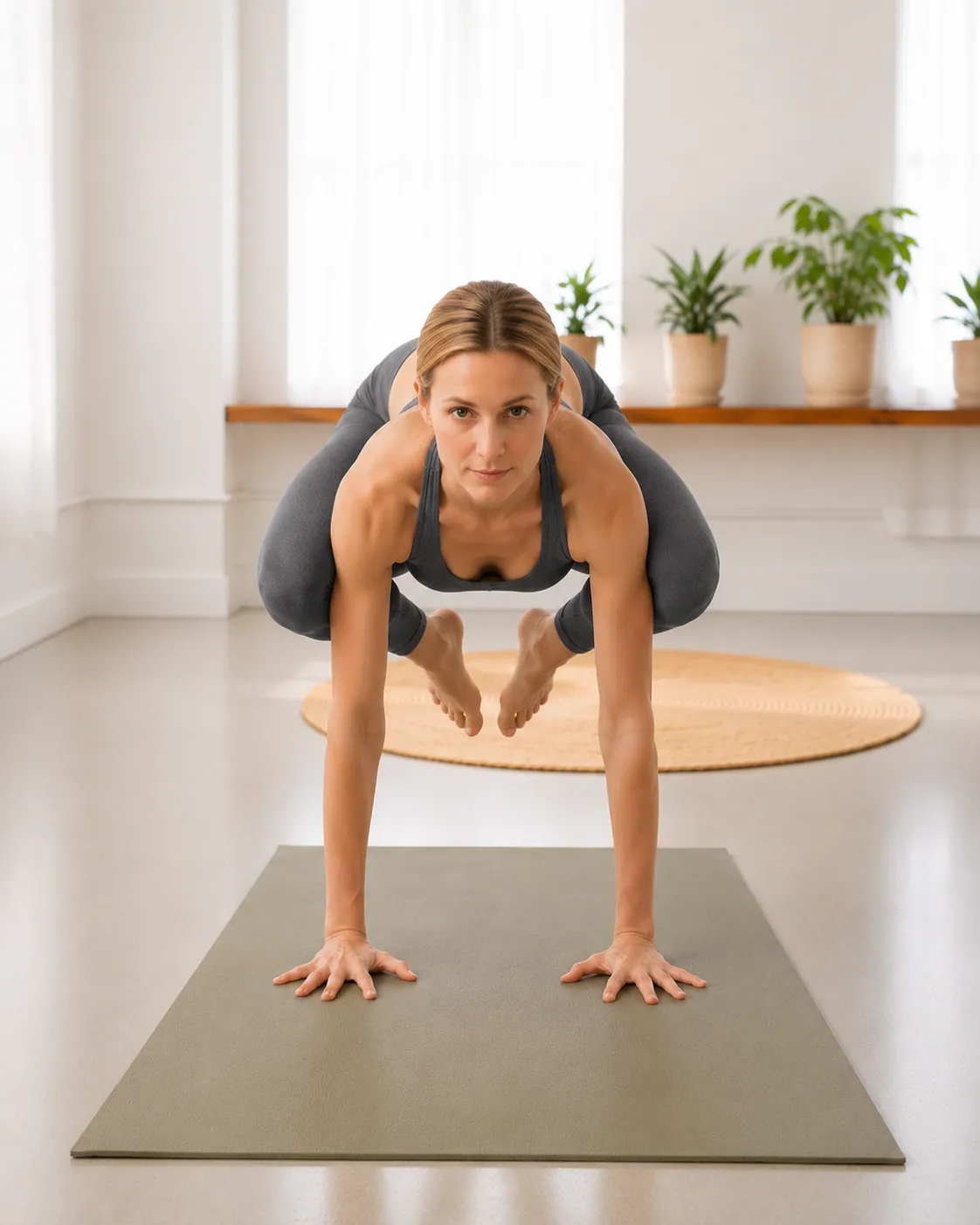
Crane is the natural progression from Crow once Crow is held effortlessly for 30+ seconds. The straight arms shift the load from the upper arms to the wrists and shoulders, demanding more strength but rewarding with a more sustainable shape.
Benefits
- Deeper wrist and shoulder strength than Bakasana
- More elegant arm-balance shape — useful for movement-based flows
- Preparation for Astavakrasana and other lifted arm balances
How to practise Crane Pose
- PREREQUISITE: stable Bakasana (Crow) for 15+ seconds.
- Set up exactly as in Bakasana: deep squat, palms on the floor, knees against the upper arms.
- Place the knees HIGHER on the arms — closer to the armpits.
- Press the floor away and STRAIGHTEN the arms completely.
- The hips lift higher, the body more vertical than in Crow.
- Hold steady. Gaze forward. The shape is more elegant, less compressed than Crow.
- To exit: bend the arms back to Crow, lower the feet, stand up.
Suggested hold: 15s · Breath: Natural
How Crane Pose affects your doshas
In Ayurveda the same pose lands differently depending on your constitution. This is the lens the app uses to sequence your practice.
| Dosha | Effect | Notes |
|---|---|---|
| Vata | Neutral | broadly neutral |
| Pitta | Neutral | broadly neutral |
| Kapha | Balancing | a good fit — helps settle this dosha |
Balance it off the mat, too
Poses and food are two sides of the same balance. Calm the same dosha on your plate:
Who should avoid or modify this pose
- ADVANCED — practice with a teacher
- PREREQUISITE: solid Bakasana before progressing
- Don't practice with wrist, elbow, or shoulder injury
- Skip with carpal tunnel syndrome
- Pregnant women shouldn't practice
If you're pregnant, injured, or managing a condition, check with a qualified teacher or clinician before practising.
Modifications
- Master Bakasana first — Crane is its straight-armed progression
- Hold for 3-5 seconds initially
- Practice the lift from a higher base (e.g., a block under each foot) to reduce wrist demand
Traditional source: Modern hatha — Modern arm balance — the straight-armed sibling of Bakasana (Crow). The deeper version with arms fully extended.