
Balance · Advanced
Peacock Pose
Mayurasana·मयूरासन·mayūrāsana
Also called: Peacock
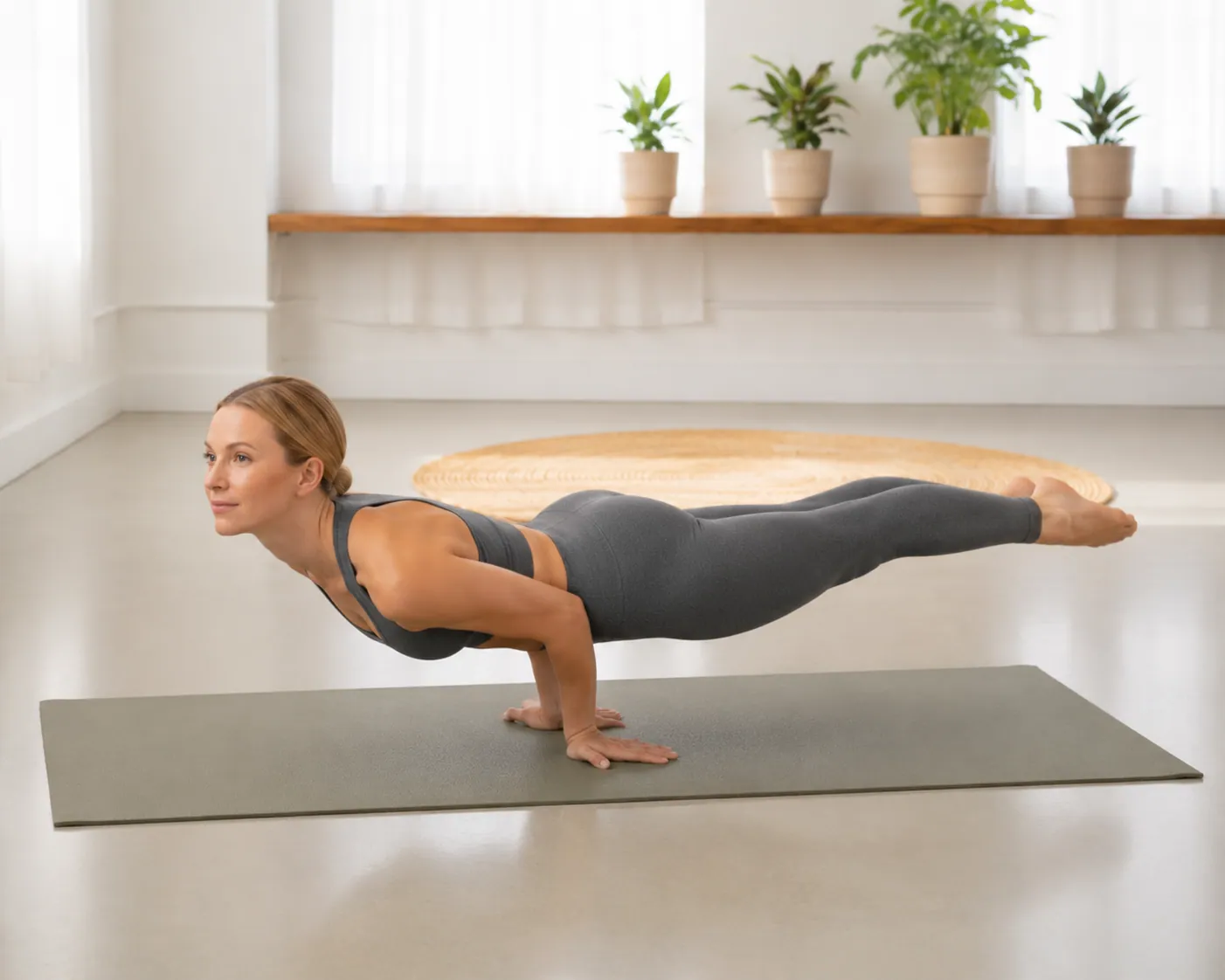
Peacock is famously hard to access — most practitioners need months of wrist conditioning before attempting. HYP's enthusiasm for its digestive effects is borne out by abdominal-pressure mechanics. Save for users who already have strong Chaturanga and Bakasana.
Benefits
- Builds extraordinary wrist, forearm, and core strength
- HYP claims significant digestive benefits — the abdominal pressure stimulates the gut
- Mental focus — the balance demands single-pointed attention
- One of the most distinctive shapes in the asana tradition
How to practise Peacock Pose
- Kneel on the mat, knees wide.
- Place the palms on the floor between the knees, fingers pointing BACK toward the body.
- Lower onto the forearms, pressing the elbows together into the lower abdomen (near the navel).
- Stretch the legs out behind you, balls of the feet on the floor.
- Shift the weight forward over the elbows; lift the feet off the floor.
- The body floats parallel to the floor, balanced entirely on the elbows pressed into the belly.
- Hold for several breaths. To exit: lower the feet, push back, sit up.
Suggested hold: 15s · Breath: Natural
How Peacock Pose affects your doshas
In Ayurveda the same pose lands differently depending on your constitution. This is the lens the app uses to sequence your practice.
| Dosha | Effect | Notes |
|---|---|---|
| Vata | Neutral | broadly neutral |
| Pitta | Neutral | broadly neutral |
| Kapha | Balancing | a good fit — helps settle this dosha |
Balance it off the mat, too
Poses and food are two sides of the same balance. Calm the same dosha on your plate:
Who should avoid or modify this pose
- ADVANCED pose — practice with a teacher
- Don't practice with wrist, elbow, or shoulder injury
- Skip with hernia, recent abdominal surgery, or severe digestive issues
- Pregnant women shouldn't practice
- Avoid with high blood pressure, heart disease, or eye conditions
- Skip immediately after eating — wait 3-4 hours
If you're pregnant, injured, or managing a condition, check with a qualified teacher or clinician before practising.
Modifications
- Build wrist strength with Chaturanga before attempting
- Practice the kneeling forearm position with feet still on the floor first
- Lift one leg at a time before lifting both
- Hold for 3-5 seconds initially; build duration over months
Traditional source: Hatha Yoga Pradipika 1.32-33 — Named in HYP Ch. 1. The text praises it as a digestive cure — capable of "digesting even kalakuta poison".