
Balance · Intermediate
Side Plank
Vasishthasana·वसिष्ठासन·vasiṣṭhāsana
Also called: Side Plank, Sage Vasishtha's Pose
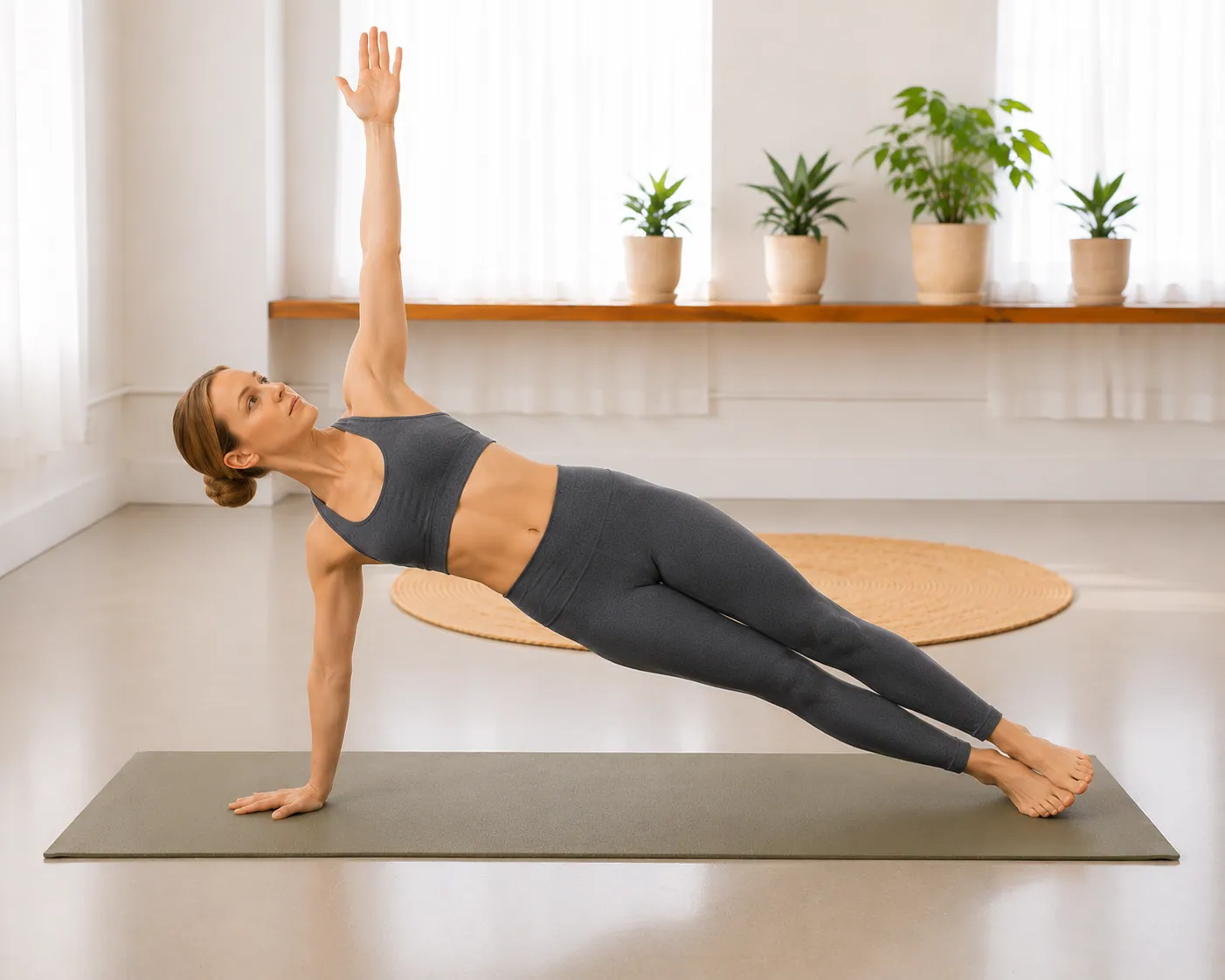
Side Plank is the side-body's counterpart to Plank — equally fundamental but more demanding. The hip-sag is the universal mistake; lifting through the hips is what makes the pose work. Use the knee-down variant freely; the strength still builds.
Benefits
- Strengthens the obliques — the often-neglected side-body core
- Trains shoulder stability under load on one arm
- Decent wrist conditioning for arm-balance progressions
- Asymmetry training — one side at a time
How to practise Side Plank
- From plank, shift the weight onto the right hand.
- Roll onto the outer edge of the right foot, stacking the left foot on top of the right.
- Stack the right shoulder over the right wrist. Keep the right arm straight.
- Extend the left arm straight up toward the ceiling. The body forms one straight line.
- Gaze either straight ahead or up at the top hand.
- Hold steady. The hips lift — don't let them sag.
- Switch sides. To exit: lower back to plank.
Suggested hold: 30s · Breath: Natural
How Side Plank affects your doshas
In Ayurveda the same pose lands differently depending on your constitution. This is the lens the app uses to sequence your practice.
| Dosha | Effect | Notes |
|---|---|---|
| Vata | Neutral | broadly neutral |
| Pitta | Neutral | broadly neutral |
| Kapha | Balancing | a good fit — helps settle this dosha |
Balance it off the mat, too
Poses and food are two sides of the same balance. Calm the same dosha on your plate:
Who should avoid or modify this pose
- Don't practice with wrist, elbow, or shoulder injury
- Skip with carpal tunnel syndrome
- Pregnant women in the second/third trimester should modify (knee-down variant)
- Avoid with severe neck pain — the gaze adds load
If you're pregnant, injured, or managing a condition, check with a qualified teacher or clinician before practising.
Modifications
- Drop the bottom knee to the floor for a knee-down variant
- Press the bottom forearm down instead of the hand for less wrist load
- Use a wall behind you to feel the alignment
- Place the top foot on the floor in front of the bottom foot (kickstand) for stability
Traditional source: Modern hatha — Modern asana, named for the sage Vasishtha — one of the seven sages of Hindu tradition. Not in HYP Ch. 1.