
Balance · Intermediate
Crow Pose
Bakasana·बकासन·bakāsana
Also called: Crow
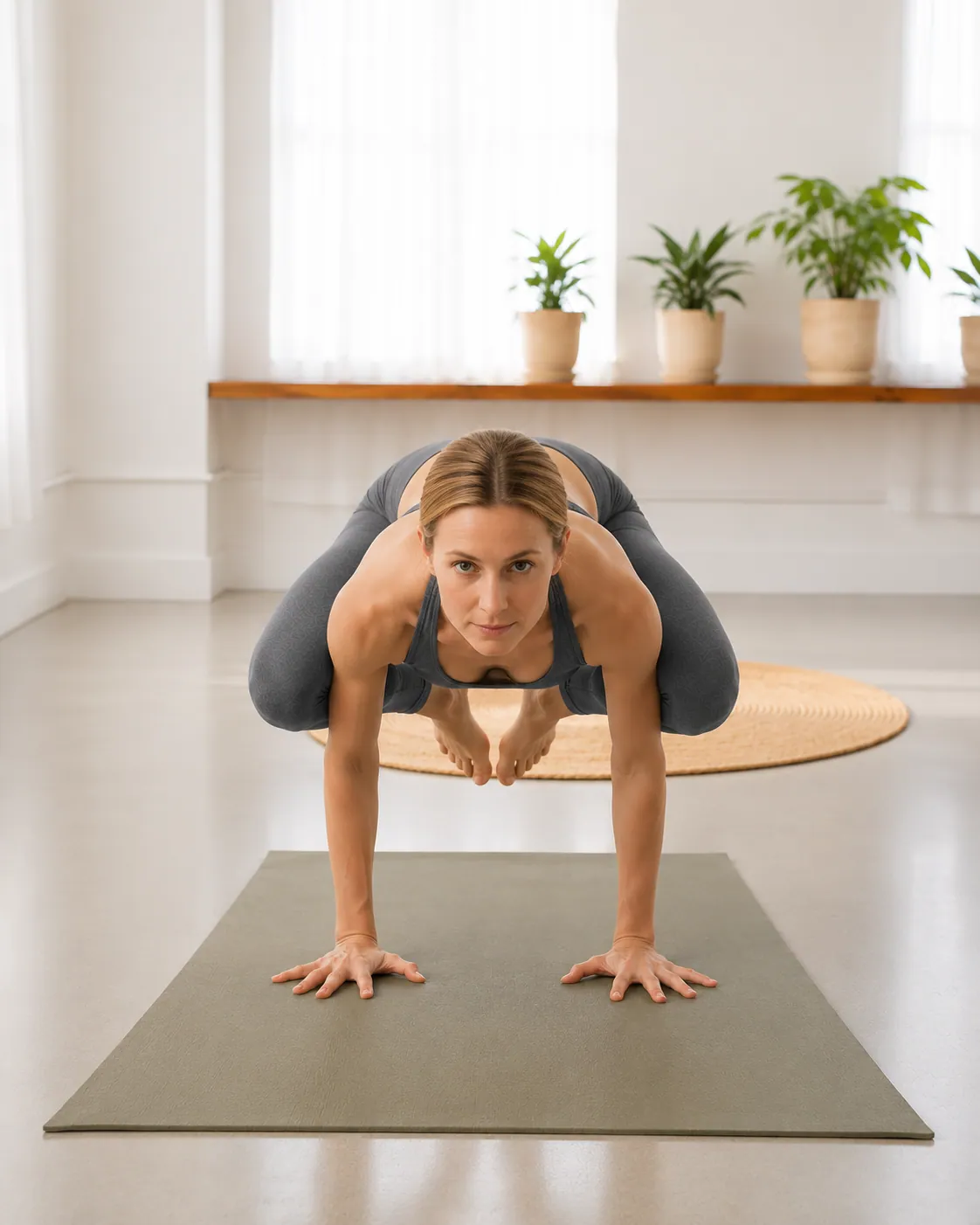
Crow is THE gateway arm balance. Most users can land it within 2-4 weeks of focused practice if they have the core and wrist strength. The trick is gaze direction — looking forward (not down) is what makes the balance findable. Use a block under the forehead during the learning curve.
Benefits
- Most accessible arm balance — the entry point to the wider arm-balance family
- Builds wrist, forearm, and shoulder strength dramatically
- Demands single-pointed focus — the gaze IS the practice
- Confidence-builder once landed — many users find their first arm balance transformative
How to practise Crow Pose
- Squat in Malasana (deep squat), feet hip-width apart, knees wide.
- Place the palms on the floor in front of the feet, shoulder-width apart, fingers spread wide.
- Bend the elbows slightly outward (chaturanga-style — elbows track over the wrists, not flared wide).
- Press the knees against the back of the upper arms, just above the elbows.
- Shift the weight forward over the hands. Lift the heels and curl the toes off the floor.
- Gaze forward — NOT down. The gaze direction is the balance.
- Hold as long as is steady. To exit: lower the feet, lift the head, stand up.
Suggested hold: 20s · Breath: Natural
How Crow Pose affects your doshas
In Ayurveda the same pose lands differently depending on your constitution. This is the lens the app uses to sequence your practice.
| Dosha | Effect | Notes |
|---|---|---|
| Vata | Neutral | broadly neutral |
| Pitta | Neutral | broadly neutral |
| Kapha | Balancing | a good fit — helps settle this dosha |
Balance it off the mat, too
Poses and food are two sides of the same balance. Calm the same dosha on your plate:
Who should avoid or modify this pose
- Don't practice with wrist, elbow, or shoulder injury
- Skip with carpal tunnel syndrome
- Pregnant women shouldn't practice past the first trimester
- Avoid with high blood pressure
- Skip if you can't yet hold a strong plank for 30 seconds
If you're pregnant, injured, or managing a condition, check with a qualified teacher or clinician before practising.
Modifications
- Practice with a block under the forehead so falling forward is safe
- Start with one foot at a time — get comfortable lifting one before both
- Place a folded blanket in front of the hands in case of a forward fall
- Build wrist and core strength first: plank, side plank, chaturanga
Traditional source: Modern hatha — Modern arm balance, named for sage Baka. Often confused with Kakasana (Crane); Bakasana has bent arms, Kakasana has straight arms.