
Standing · Beginner
Mountain Pose
Tadasana·ताडासन·tāḍāsana
Also called: Palm Tree Pose, Samasthiti
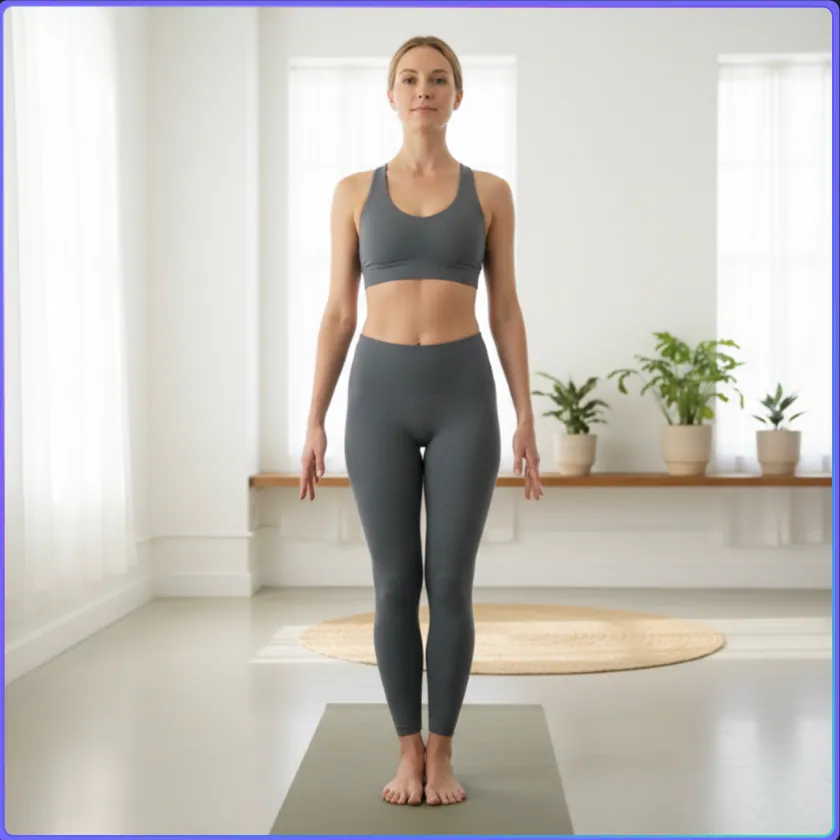
Tadasana is the reference pose for everything else — the alignment template the body returns to between asanas. For users with restless minds (vata-heavy), the demand to stand still and observe is itself the practice.
Benefits
- Establishes neutral spinal alignment used in all standing asanas
- Strengthens the thighs, knees, and ankles
- Improves balance and proprioception
- Reduces postural slumping and forward-head posture
How to practise Mountain Pose
- Stand at the front of your mat with feet together, big toes touching, heels slightly apart.
- Distribute your weight evenly across both feet — front, back, and edges.
- Lift the kneecaps gently without locking the knees. Engage the thighs.
- Roll the shoulders back and down, away from the ears.
- Let the arms hang naturally by your sides, palms facing the body or forward.
- Lengthen the spine — crown of the head reaches toward the ceiling.
- Soften the jaw, soften the eyes. Breathe naturally.
Suggested hold: 60s · Breath: Natural
How Mountain Pose affects your doshas
In Ayurveda the same pose lands differently depending on your constitution. This is the lens the app uses to sequence your practice.
| Dosha | Effect | Notes |
|---|---|---|
| Vata | Balancing | a good fit — helps settle this dosha |
| Pitta | Neutral | broadly neutral |
| Kapha | Neutral | broadly neutral |
Balance it off the mat, too
Poses and food are two sides of the same balance. Calm the same dosha on your plate:
Who should avoid or modify this pose
- Don't practice with severe vertigo or balance disorders — use a wall for support
- Avoid if you have a recent ankle or foot injury
- If you have low blood pressure or feel lightheaded, rise slowly afterward
If you're pregnant, injured, or managing a condition, check with a qualified teacher or clinician before practising.
Modifications
- Stand with feet hip-width apart for greater stability
- Practice with the back against a wall for proprioceptive feedback
- If standing is difficult, practice lying on the back as Supta Tadasana
Traditional source: Modern hatha — Modern foundational pose, codified in 20th-century hatha. Not named in the Hatha Yoga Pradipika Ch. 1.