
Standing · Beginner
Side Angle Pose
Parsvakonasana·पार्श्वकोणासन·pārśvakoṇāsana
Also called: Extended Side Angle, Utthita Parsvakonasana
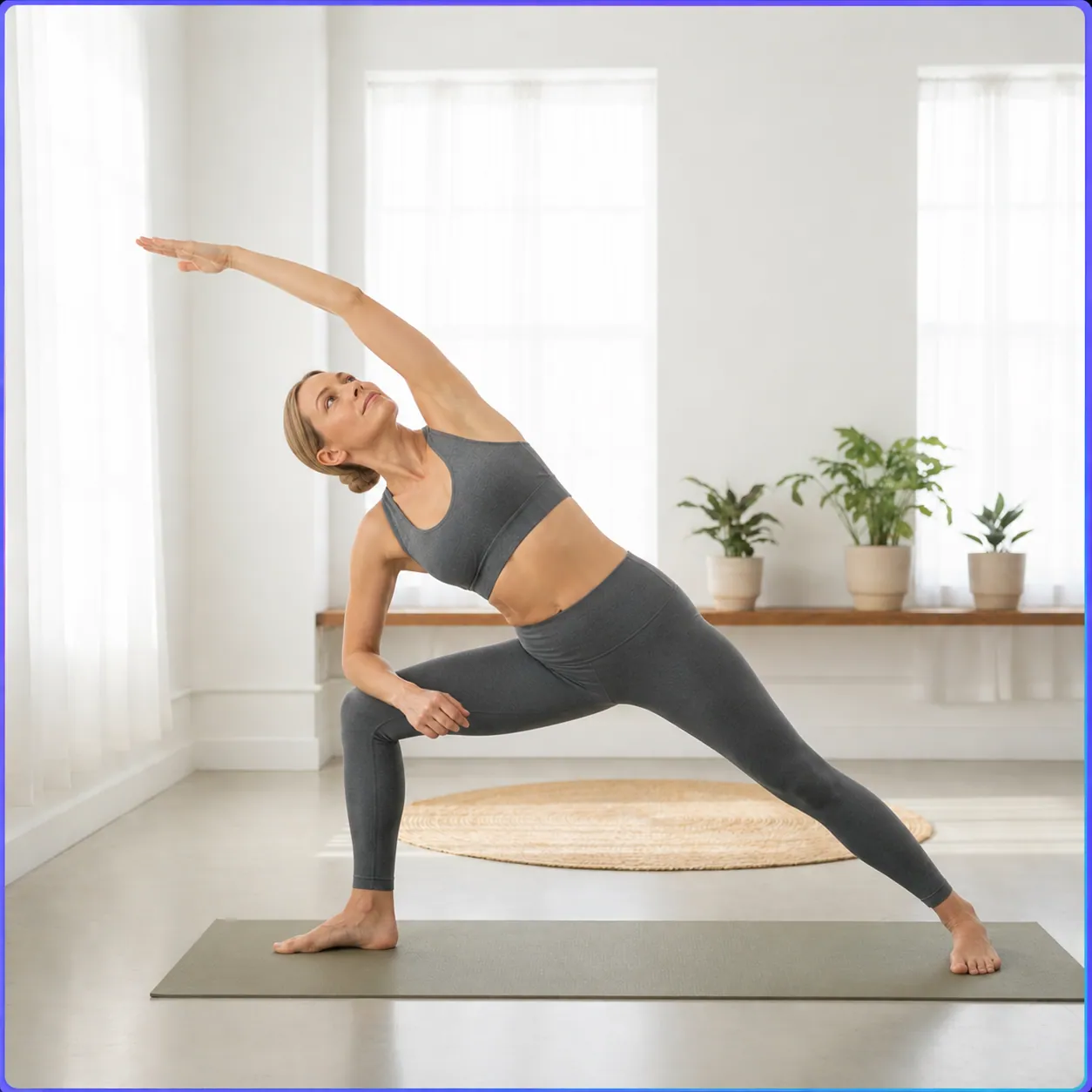
Side Angle is where users learn what a 'long side body' actually feels like. The geometry forces the underside ribs to elongate — almost no other pose achieves the same lateral stretch with a strong base.
Benefits
- Lengthens the entire side body from outer foot to fingertips
- Strengthens the front leg through the long hold
- Opens the chest in lateral flexion — distinct stretch from forward folds
- Combines stamina, strength, and lateral mobility in one shape
How to practise Side Angle Pose
- Step your feet wide apart on the mat, about a leg-length.
- Turn your right foot out 90 degrees. Slightly turn the left foot in.
- Bend the right knee toward 90 degrees, knee tracking over the ankle.
- Lower your right forearm onto the right thigh, OR rest the right hand on a block outside the right foot.
- Reach the left arm overhead, in line with the spine. Palm faces the floor.
- Open the chest toward the ceiling, twisting the torso slightly upward.
- Look up under the top arm if your neck allows. Switch sides.
Suggested hold: 45s · Breath: Paced
How Side Angle Pose affects your doshas
In Ayurveda the same pose lands differently depending on your constitution. This is the lens the app uses to sequence your practice.
| Dosha | Effect | Notes |
|---|---|---|
| Vata | Balancing | a good fit — helps settle this dosha |
| Pitta | Neutral | broadly neutral |
| Kapha | Balancing | a good fit — helps settle this dosha |
Balance it off the mat, too
Poses and food are two sides of the same balance. Calm the same dosha on your plate:
Who should avoid or modify this pose
- Pregnant women in late pregnancy should narrow the stance and use a block
- Don't practice with severe knee injury in the front leg
- Avoid with neck injury — keep gaze straight ahead
- Skip with insomnia (this pose is energizing — not a pre-bed choice)
If you're pregnant, injured, or managing a condition, check with a qualified teacher or clinician before practising.
Modifications
- Forearm on the front thigh instead of the hand to the floor
- Block under the bottom hand at any height
- Top arm on the hip if the shoulder fatigues
- Shorten the stance if the front knee won't track over the ankle
Traditional source: Modern hatha — Modern hatha. "Parsva" = side, "kona" = angle. Not in the Hatha Yoga Pradipika Ch. 1.