
Seated · Beginner
Bound Angle Pose
Baddha Konasana·बद्धकोणासन·baddha koṇāsana
Also called: Cobbler Pose, Butterfly Pose
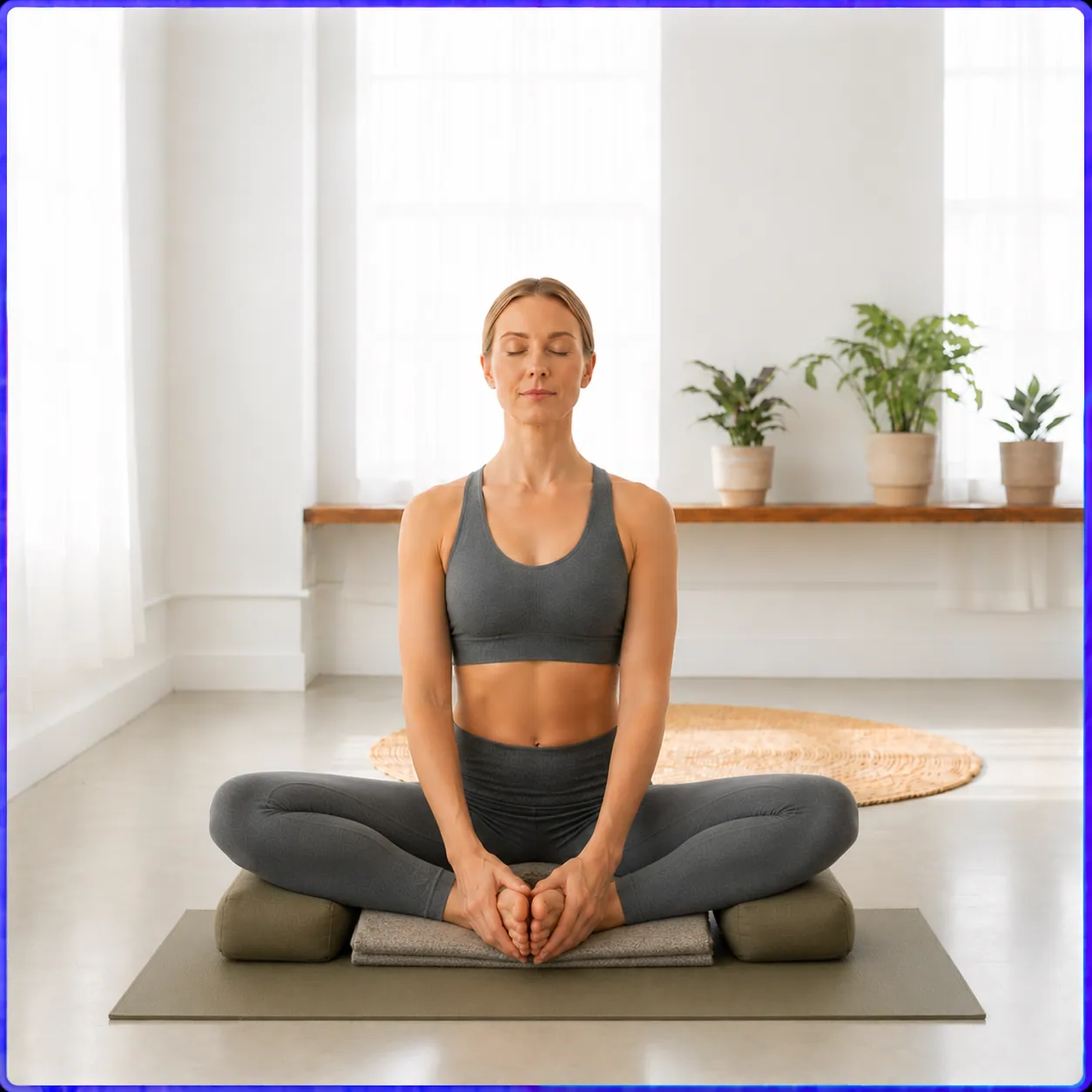
Bound Angle is the most accessible hip opener in the catalog — works for almost everyone. Don't push the knees down; that's the textbook injury. The release happens through gravity over time, not through force.
Benefits
- Releases the inner thighs and adductors — different from forward folds
- Opens the hips through external rotation
- Traditional pose for menstrual discomfort relief and fertility support
- Can be held passively for many minutes — useful as a meditation seat for users with tight cross-legged seats
How to practise Bound Angle Pose
- Sit on the front edge of a folded blanket.
- Bring the soles of the feet together. Let the knees fall apart to the sides.
- Hold your feet or ankles with both hands.
- Move the heels closer to the body or further away — find what lets the knees release naturally.
- Lengthen the spine — don't round forward to bring the knees down.
- Let the knees descend toward the floor at their own pace. Never push them.
- Optional: place a block or cushion under each knee for support.
Suggested hold: 120s · Breath: Natural
How Bound Angle Pose affects your doshas
In Ayurveda the same pose lands differently depending on your constitution. This is the lens the app uses to sequence your practice.
| Dosha | Effect | Notes |
|---|---|---|
| Vata | Balancing | a good fit — helps settle this dosha |
| Pitta | Balancing | a good fit — helps settle this dosha |
| Kapha | Neutral | broadly neutral |
Balance it off the mat, too
Poses and food are two sides of the same balance. Calm the same dosha on your plate:
Who should avoid or modify this pose
- Pregnant women — practice with the back against a wall and don't fold forward in the third trimester
- Don't practice with groin or hip injury
- Skip with severe knee injury — let the knees rest on cushions
- Avoid with sciatica that flares with hip external rotation
If you're pregnant, injured, or managing a condition, check with a qualified teacher or clinician before practising.
Modifications
- Sit on a folded blanket — most users need this to keep the spine long
- Place blocks or cushions under each knee for support (don't push the knees down)
- Move the feet further from the body for an easier hip stretch
- Practice with the back against a wall for postural support
- Restorative variant: lean back on a bolster behind the spine
Traditional source: Modern hatha — Modern hatha. Some lineages associate it with HYP's Bhadrasana (1.53-54), but classification varies.