
Twist · Intermediate
Revolved Triangle
Parivrtta Trikonasana·परिवृत्त त्रिकोणासन·parivṛtta trikoṇāsana
Also called: Revolved Triangle Pose
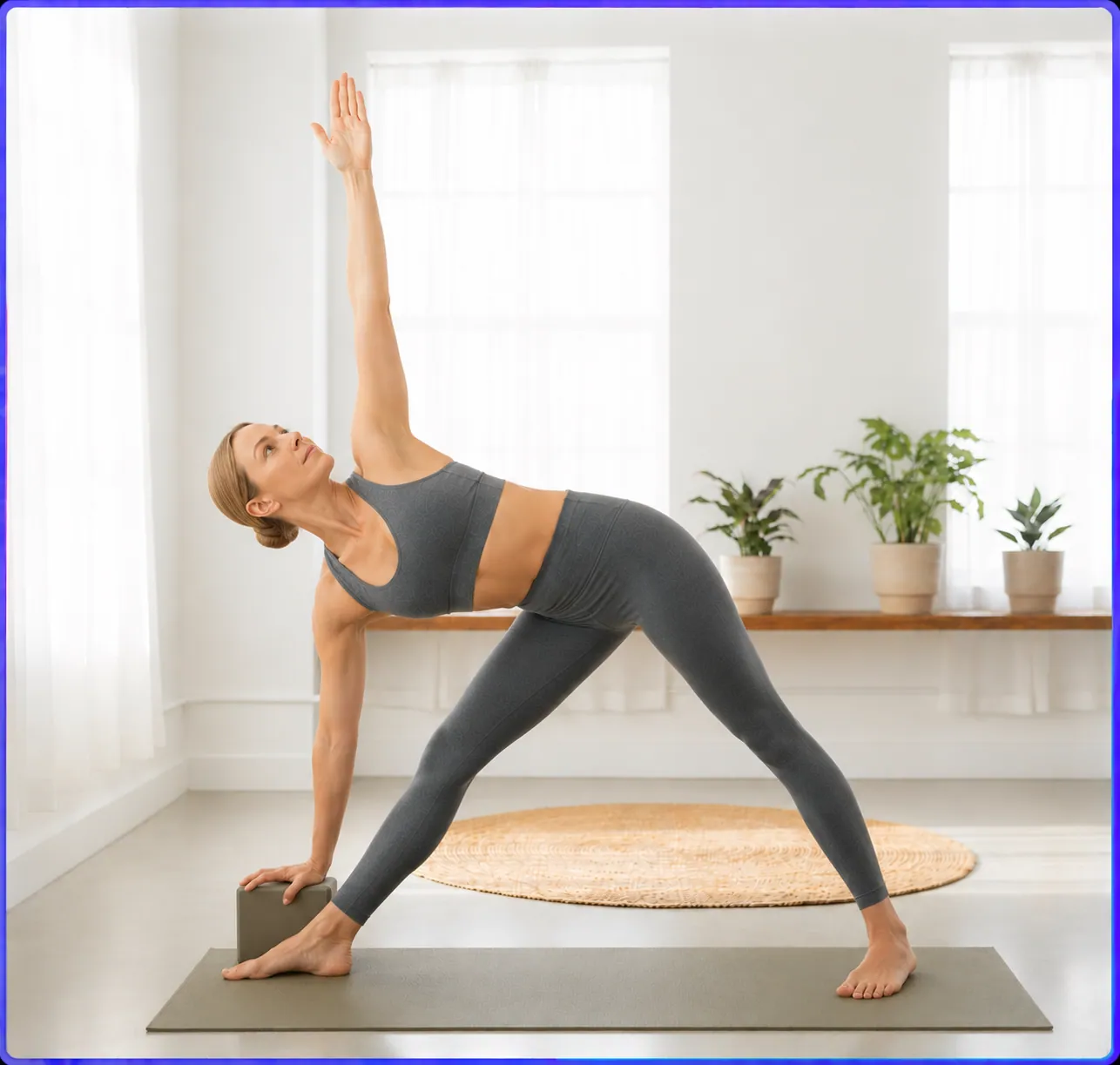
Revolved Triangle is the most demanding twist in the catalog at the intermediate level. The combination of hamstring length + balance + rotation reveals exactly how much rotational mobility users actually have. Always use a block under the bottom hand — no exceptions for new practitioners.
Benefits
- Combines hamstring stretch + deep spinal rotation in one shape
- Strengthens the standing leg and core
- Stimulates abdominal organs through the twist
- More demanding than seated twists — useful for advancing rotational mobility
How to practise Revolved Triangle
- Stand with feet wide apart on the mat, but narrower than for Trikonasana — about 3 feet apart.
- Turn the right foot out 90 degrees. Square the hips toward the right leg.
- Inhale and reach the left arm forward, lengthening through the spine.
- Exhale and rotate the torso to the right, lowering the left hand to the floor outside the right foot, OR onto a yoga block.
- Reach the right arm straight up toward the ceiling, stacking the shoulders.
- Look up under the top arm if the neck allows. Press both feet firmly down.
- To exit: inhale and rise back to standing. Switch sides.
Suggested hold: 30s · Breath: Paced
How Revolved Triangle affects your doshas
In Ayurveda the same pose lands differently depending on your constitution. This is the lens the app uses to sequence your practice.
| Dosha | Effect | Notes |
|---|---|---|
| Vata | Neutral | broadly neutral |
| Pitta | Balancing | a good fit — helps settle this dosha |
| Kapha | Balancing | a good fit — helps settle this dosha |
Balance it off the mat, too
Poses and food are two sides of the same balance. Calm the same dosha on your plate:
Who should avoid or modify this pose
- Pregnant women shouldn't practice — the closed twist compresses the belly
- Don't practice with herniated disc or severe lower-back injury
- Skip with high blood pressure or migraine
- Avoid with neck injury — keep gaze straight ahead
- Skip with severe sciatica
If you're pregnant, injured, or managing a condition, check with a qualified teacher or clinician before practising.
Modifications
- Place the bottom hand on a yoga block at any height — not the floor
- Use a wall behind you for stability — back heel pressing into the wall
- Reduce the foot-distance to make the balance easier
- Practice with the top arm on the hip instead of overhead
Traditional source: Modern hatha — Modern hatha rotational variant of Trikonasana. "Parivṛtta" = revolved. Not in the Hatha Yoga Pradipika Ch. 1.