
Supine · Beginner
Belly Twist
Jathara Parivartanasana·जठर परिवर्तनासन·jaṭhara parivartanāsana
Also called: Reclined Belly Twist, Revolved Abdomen Pose
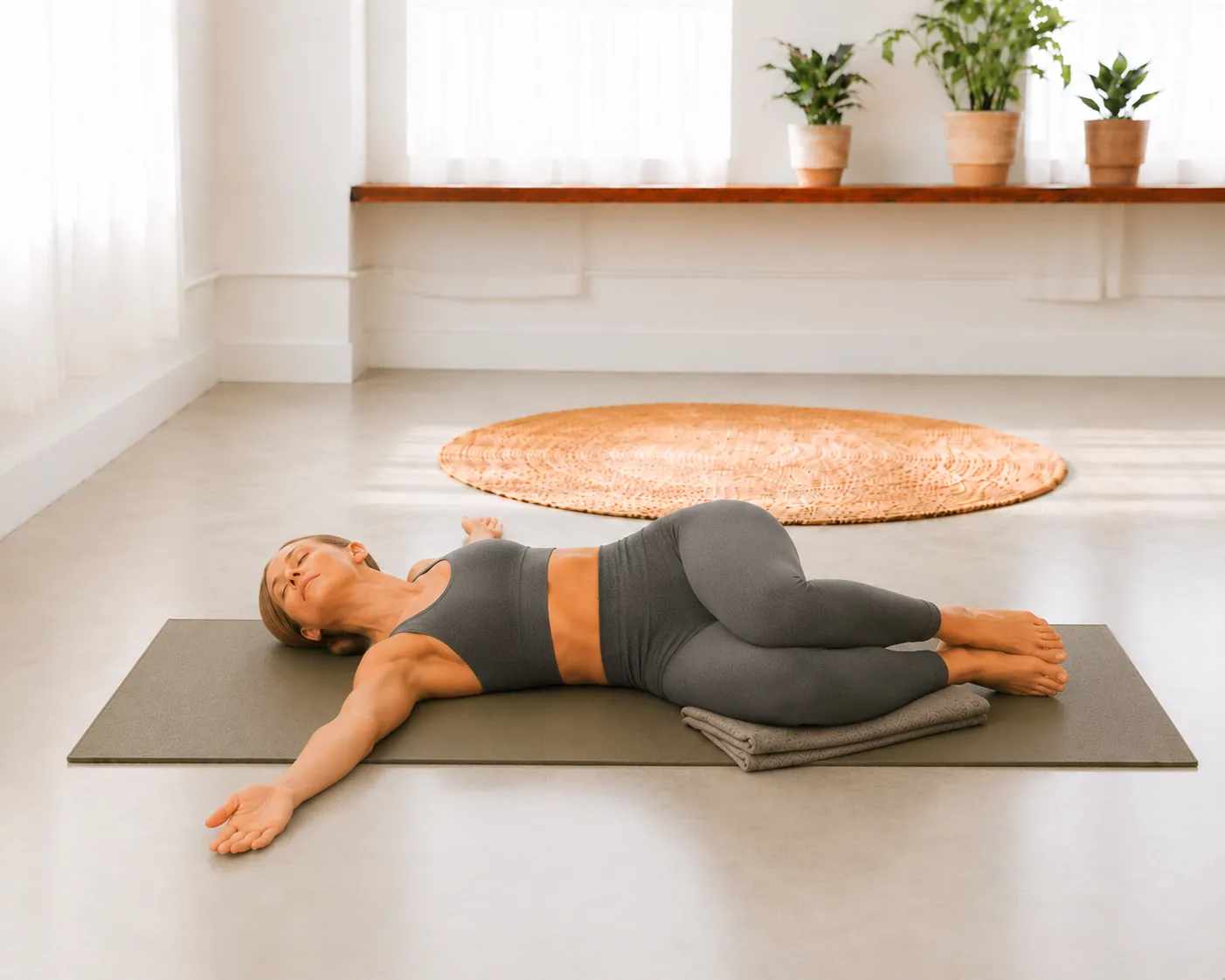
Belly Twist is one of the most universally-prescribed poses in the catalog — short of injury, almost everyone benefits from it almost every day. Especially useful as the last pose before Savasana to neutralize the spine after asymmetric work.
Benefits
- Releases the muscles around the lumbar spine and SI joint
- Stimulates abdominal organs — supports digestion
- Activates the parasympathetic response — pre-sleep favorite
- Tri-doshic — works for everyone, which is rare
How to practise Belly Twist
- Lie on your back on a flat surface.
- Draw both knees in toward your chest.
- Extend your arms out to the sides at shoulder height, palms up.
- Lower both knees to the right toward the floor, keeping them stacked.
- Turn your head to the left.
- Both shoulders stay on the floor — don't force the moving shoulder down.
- Place a cushion under the moving knees if they don't reach the floor. Switch sides.
Suggested hold: 60s · Breath: Natural
How Belly Twist affects your doshas
In Ayurveda the same pose lands differently depending on your constitution. This is the lens the app uses to sequence your practice.
| Dosha | Effect | Notes |
|---|---|---|
| Vata | Balancing | a good fit — helps settle this dosha |
| Pitta | Balancing | a good fit — helps settle this dosha |
| Kapha | Balancing | a good fit — helps settle this dosha |
Balance it off the mat, too
Poses and food are two sides of the same balance. Calm the same dosha on your plate:
Who should avoid or modify this pose
- Pregnant women should practice an open variant — knees apart, don't compress the belly
- Don't practice with herniated disc or SI joint instability
- Avoid after recent abdominal, hip, or back surgery
- Skip during an active IBS flare
If you're pregnant, injured, or managing a condition, check with a qualified teacher or clinician before practising.
Modifications
- Place a bolster or cushion under the moving knees so they don't reach the floor
- Keep the knees stacked rather than letting them slide apart
- Skip turning the head if the neck is sensitive — gaze straight up
- Use a single-leg variant: extend the bottom leg long, only the top knee crosses over
Traditional source: Modern hatha — Modern hatha. "Jaṭhara" = belly, "parivartana" = revolving. Not in the Hatha Yoga Pradipika Ch. 1.