
Supine · Beginner
Knees-to-Chest Pose
Apanasana·अपानासन·apānāsana
Also called: Wind-Relieving Pose, Pavanamuktasana (similar)
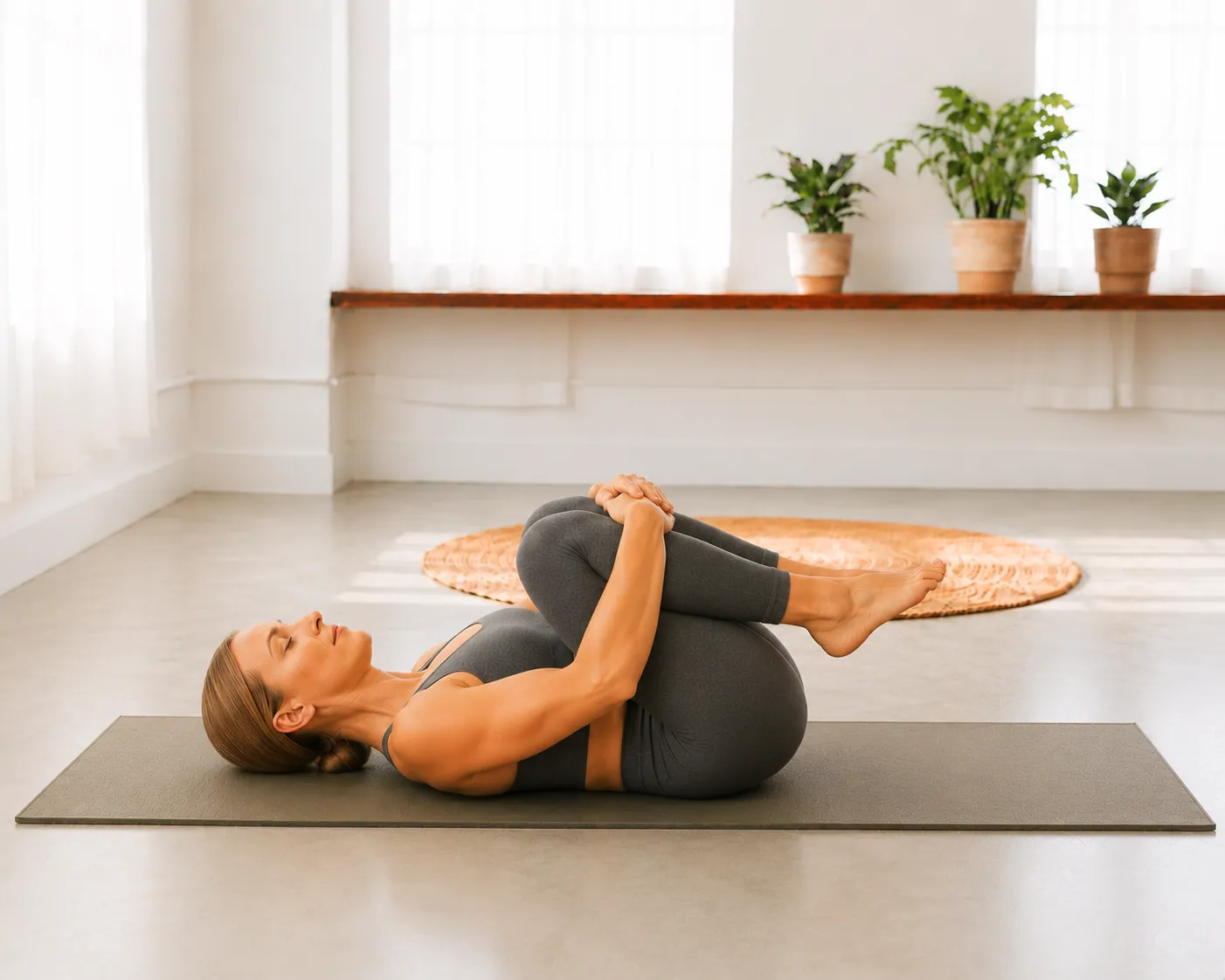
Apanasana is the simplest reset pose — the spine returns to neutral, the lower back releases, the belly gets gentle compression. Use it freely between deeper poses. The Sanskrit name acknowledges that this pose moves things downward and out, which is exactly what most kapha-heavy mornings need.
Benefits
- Releases the lower back through gentle spinal flexion
- Stimulates the colon — supports elimination ('apāna' literally means downward-moving energy)
- Useful between stronger asanas as a neutralizing reset
- Direct relief for trapped gas and abdominal tightness
How to practise Knees-to-Chest Pose
- Lie on your back on a soft surface.
- Bend both knees and draw them toward your chest.
- Wrap your arms around your shins. Hands hold opposite elbows OR clasp the shins.
- Soften your shoulders down to the floor.
- Hug the knees gently in toward your chest with each exhale.
- Optional: rock side to side gently for a lower-back massage.
- Optional: hold one knee at a time (Eka Pada Apanasana) for an easier variation.
Suggested hold: 45s · Breath: Natural
How Knees-to-Chest Pose affects your doshas
In Ayurveda the same pose lands differently depending on your constitution. This is the lens the app uses to sequence your practice.
| Dosha | Effect | Notes |
|---|---|---|
| Vata | Balancing | a good fit — helps settle this dosha |
| Pitta | Neutral | broadly neutral |
| Kapha | Balancing | a good fit — helps settle this dosha |
Balance it off the mat, too
Poses and food are two sides of the same balance. Calm the same dosha on your plate:
Who should avoid or modify this pose
- Pregnant women shouldn't compress the belly — skip or modify by drawing the knees apart and around the belly instead
- Don't practice immediately after eating — wait 1-2 hours
- Avoid with severe hip or knee injury
- Skip with herniated disc that worsens with spinal flexion
If you're pregnant, injured, or managing a condition, check with a qualified teacher or clinician before practising.
Modifications
- Hold one knee at a time (Eka Pada Apanasana) — easier on the lower back
- Hold the backs of the thighs instead of the shins for shoulder issues
- Roll gently side to side for a lower-back massage variation
- Skip if any compression worsens digestive distress
Traditional source: Modern hatha — Modern hatha. Named for "apāna" — the downward-moving prana that governs elimination. Not in the Hatha Yoga Pradipika Ch. 1.