
Backbend · Advanced
King Pigeon Pose
Kapotasana·कपोतासन·kapotāsana
Also called: Pigeon (full expression)
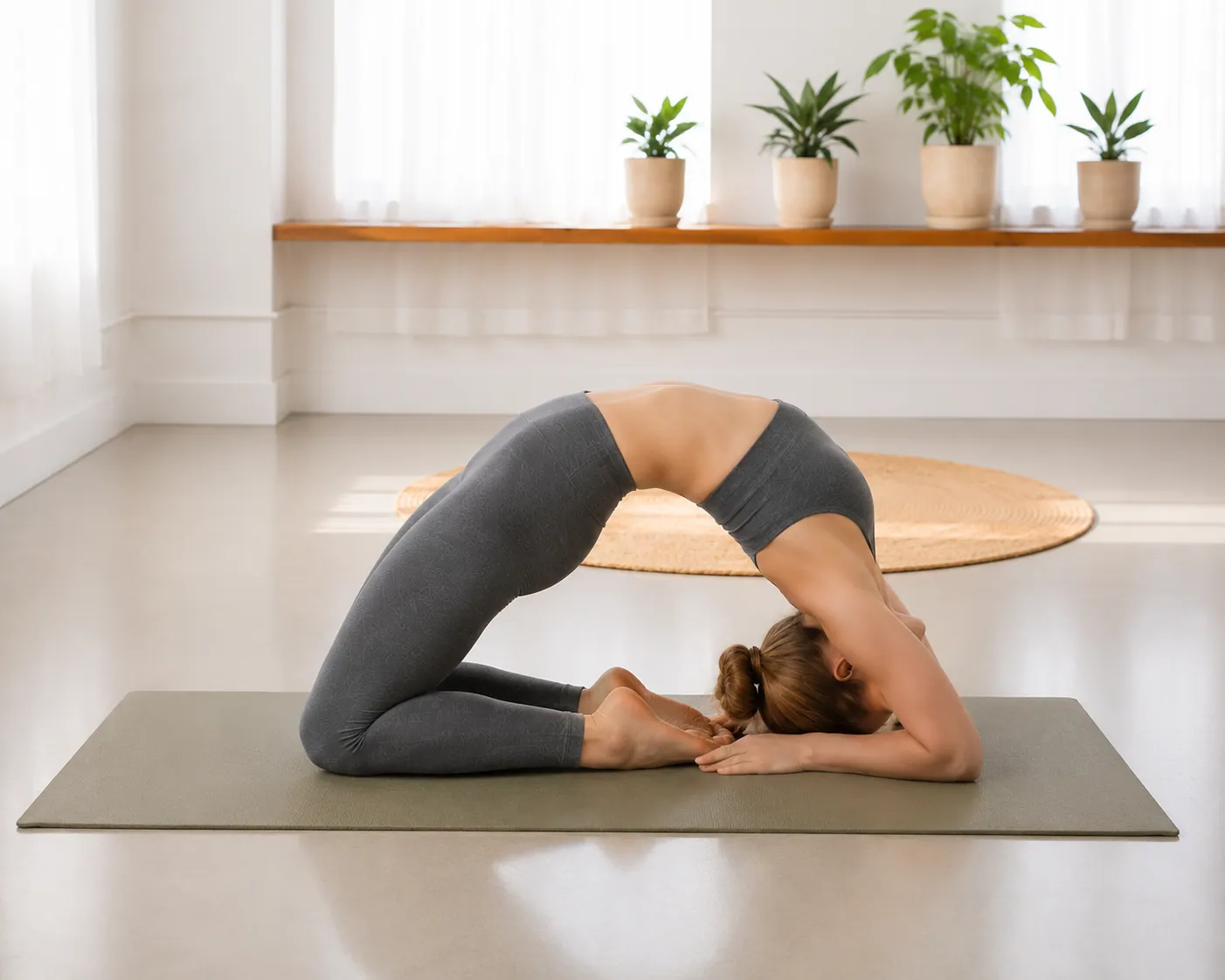
Kapotasana is one of the most demanding backbends in modern practice. The combination of hip-flexor flexibility, spinal extension, and shoulder opening required is rare. Save for advanced practitioners with a regular Ustrasana and supported-bridge habit.
Benefits
- Deepest backbend in the catalog — opens the entire front body
- Releases the hip flexors and quadriceps simultaneously
- Major chest and shoulder opening — counters years of forward posture
- Cardiovascular response — significant adrenaline release; many users feel euphoric afterward
How to practise King Pigeon Pose
- PREREQUISITE: established Ustrasana (Camel Pose), Bhujangasana, and Setu Bandha.
- Kneel with the knees hip-width apart, thighs vertical.
- Inhale, lift the chest, and reach the arms overhead.
- Exhale and arch back, leading with the chest. Place the hands on the heels or further forward.
- Walk the hands toward the feet, eventually grasping the toes or pulling the head toward the feet.
- Drop the head back gently — eyes either looking at the feet or closed.
- To exit: walk the hands back, lift the chest, sit up slowly.
Suggested hold: 30s · Breath: Paced
How King Pigeon Pose affects your doshas
In Ayurveda the same pose lands differently depending on your constitution. This is the lens the app uses to sequence your practice.
| Dosha | Effect | Notes |
|---|---|---|
| Vata | Neutral | broadly neutral |
| Pitta | Neutral | broadly neutral |
| Kapha | Balancing | a good fit — helps settle this dosha |
Balance it off the mat, too
Poses and food are two sides of the same balance. Calm the same dosha on your plate:
Who should avoid or modify this pose
- ADVANCED pose — work with a teacher before attempting
- Don't practice with severe lower-back injury, herniated disc, or sacroiliac instability
- Skip with neck injury or recent shoulder surgery
- Pregnant women shouldn't practice
- Avoid with high or low blood pressure, vertigo, or migraine
If you're pregnant, injured, or managing a condition, check with a qualified teacher or clinician before practising.
Modifications
- Build Ustrasana for months before attempting Kapotasana
- Use a wall — start with the hands on the wall, walk them down gradually over weeks
- Place blocks against the heels to give the hands a higher target
- Hold for only 5-10 seconds at first
Traditional source: Modern hatha — Modern advanced backbend. Not in HYP Ch. 1. Often confused with Eka Pada Rajakapotasana; the full Kapotasana is a kneeling deep backbend, not the asymmetric hip-opener.