
Inversion · Beginner
Downward-Facing Dog
Adho Mukha Svanasana·अधो मुख श्वानासन·adho mukha śvānāsana
Also called: Down Dog, Inverted-V Pose
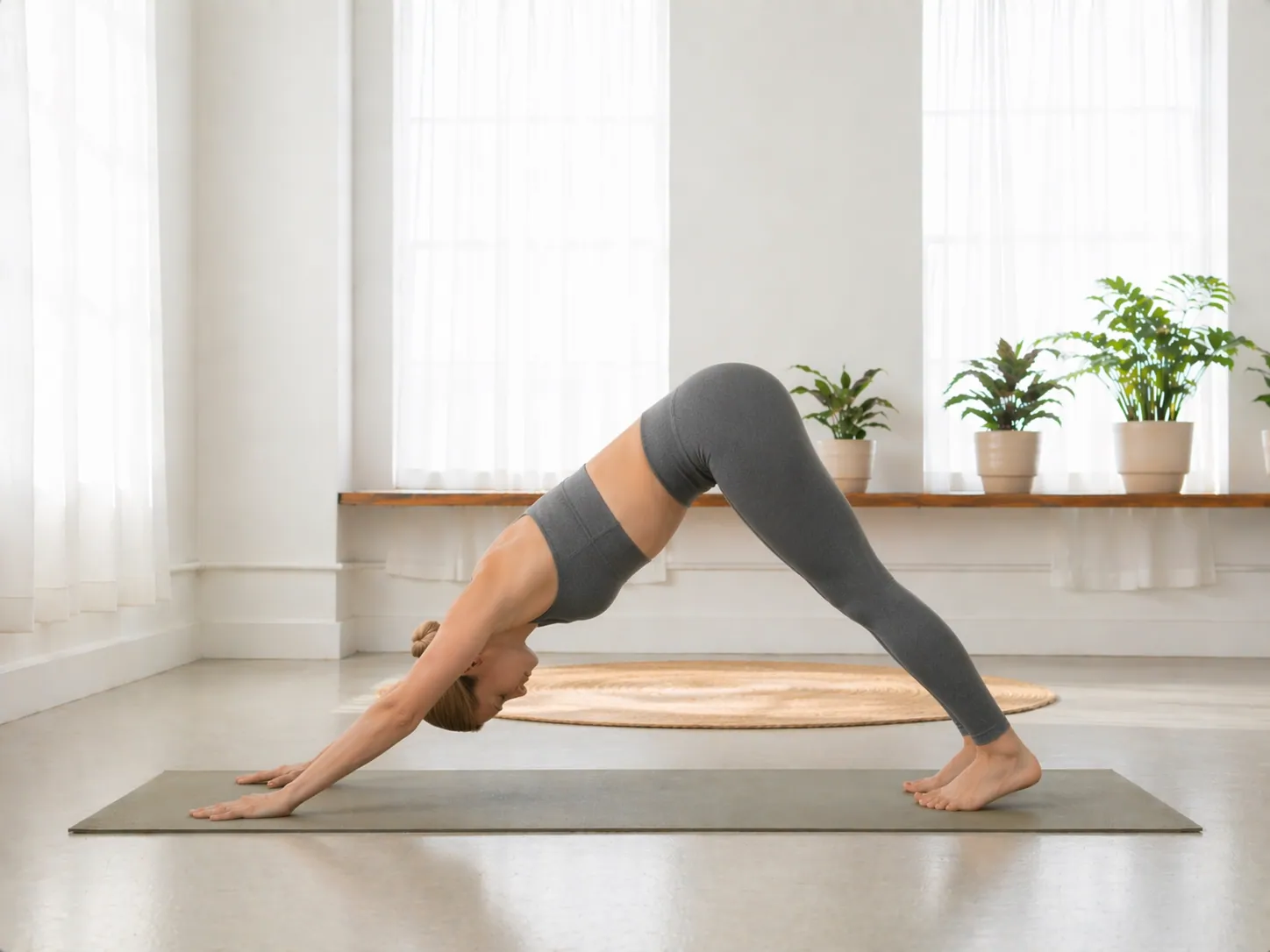
Down Dog is the swiss-army-knife asana — strengthening, stretching, and a mild inversion all at once. It's why nearly every modern flow returns to it repeatedly. For the typical desk-bound user, holding it for 60 seconds restores more posture than ten one-breath visits ever will.
Benefits
- Strengthens the shoulders, arms, and wrists while elongating the entire posterior chain
- Mild inversion — refreshes the brain and counters the heaviness of long sitting
- Functions as a transition pose, letting the breath catch up between stronger asanas
- Common entry-point inversion for users not yet ready for headstand or shoulderstand
How to practise Downward-Facing Dog
- Come to all fours on hands and knees.
- Place the wrists directly under the shoulders. Spread the fingers wide.
- Tuck the toes under so the balls of the feet press into the mat.
- Inhale. On the exhale, lift the hips up and back, straightening the legs as much as is comfortable.
- The body forms an inverted V — hips high, hands and feet rooting down.
- Bend the knees as much as needed to keep the spine long.
- Press the chest gently toward the thighs. Let the head hang naturally between the arms.
Suggested hold: 60s · Breath: Natural
How Downward-Facing Dog affects your doshas
In Ayurveda the same pose lands differently depending on your constitution. This is the lens the app uses to sequence your practice.
| Dosha | Effect | Notes |
|---|---|---|
| Vata | Balancing | a good fit — helps settle this dosha |
| Pitta | Neutral | broadly neutral |
| Kapha | Balancing | a good fit — helps settle this dosha |
Balance it off the mat, too
Poses and food are two sides of the same balance. Calm the same dosha on your plate:
Who should avoid or modify this pose
- Pregnant women in late pregnancy should avoid the long hold — the inversion is uncomfortable
- Don't practice with a recent wrist, shoulder, or arm injury
- Avoid with severe high blood pressure or detached retina
- Skip during an active migraine — head below heart aggravates it
- Wait at least three months after carpal tunnel surgery
If you're pregnant, injured, or managing a condition, check with a qualified teacher or clinician before practising.
Modifications
- Bend the knees generously — straight legs are not the goal
- Practice with the hands on a chair seat for wrist sensitivity (Half Down Dog)
- Use a folded mat or wedge under the heels of the hands to relieve wrist pressure
- Alternate with Child's Pose if 60 seconds feels too long initially
Traditional source: Modern hatha — Modern asana, codified in 20th-century vinyasa lineages (Krishnamacharya, Ashtanga). Not enumerated in the Hatha Yoga Pradipika Ch. 1.