
Inversion · Advanced
Headstand
Sirsasana·शीर्षासन·śīrṣāsana
Also called: Salamba Sirsasana (supported), King of Asanas (Iyengar)
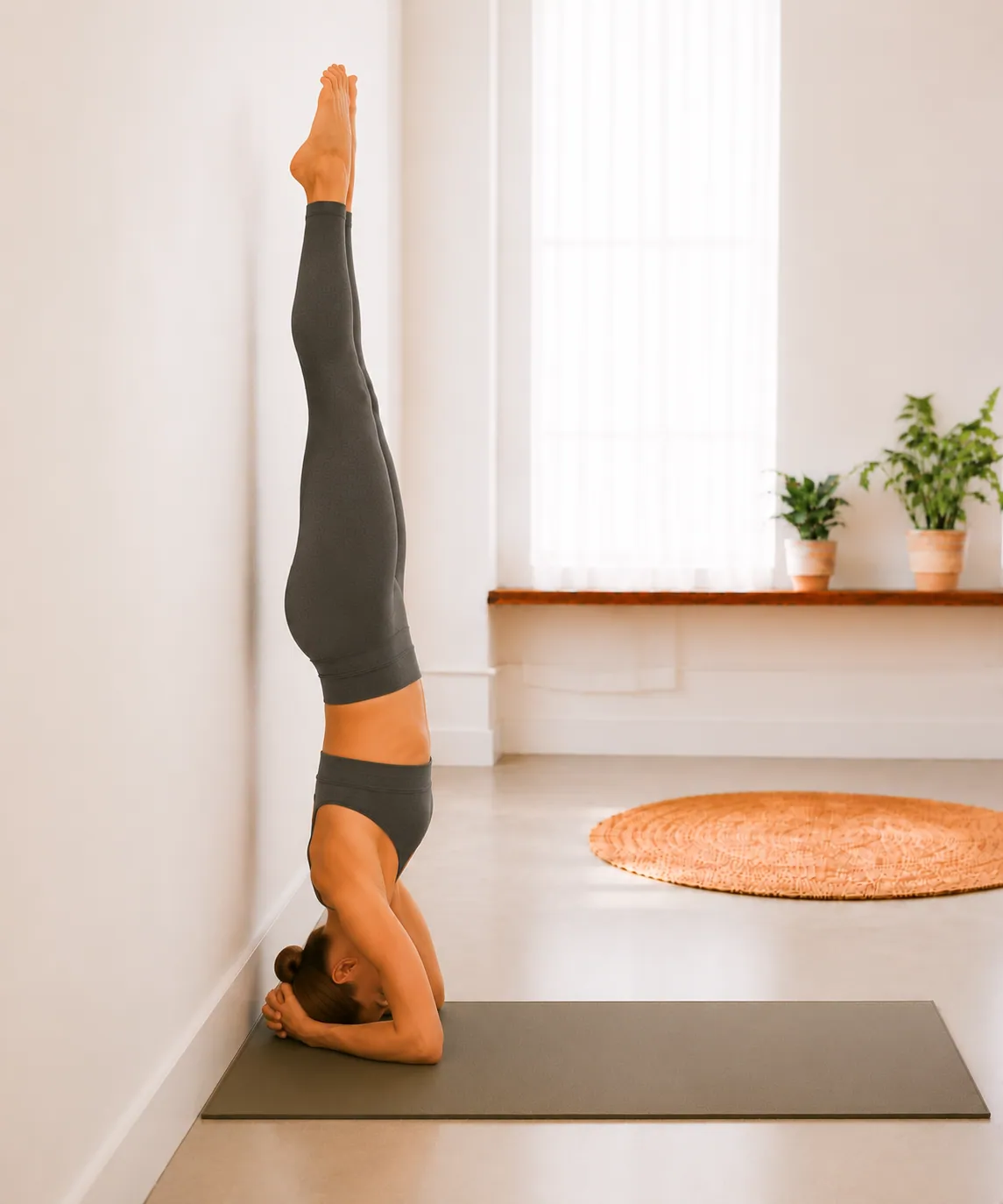
Sirsasana is the most consequential pose in the catalog — the benefits are real and the injury risk is real. Insist on teacher guidance for new practitioners. For app-only users, recommend Legs Up the Wall as an effective alternative until they're working with someone in person.
Benefits
- Profound inversion — reverses venous flow, decompresses the spine
- Builds extreme core, shoulder, and forearm strength
- Concentration practice — most users learn what real focus feels like only after holding their first 60-second headstand
- Iyengar called it the king of asanas paired with Sarvangasana the queen
How to practise Headstand
- WARNING: This is an advanced inversion. Practice with a teacher first. Improper form can cause cervical-spine injury.
- Kneel near a wall. Interlace the fingers and place the forearms on the mat, elbows shoulder-width apart.
- Place the crown of the head on the mat, the back of the head cradled in the interlaced hands.
- Lift the hips up like Down Dog. Walk the feet in toward the elbows.
- Bend the knees in toward the chest, then slowly extend the legs straight up toward the ceiling.
- Most of the weight should be in the forearms, NOT the head — only 10-20% on the crown.
- New practitioners: keep the hold short and come down well before fatigue. Come down slowly with the same control.
Suggested hold: 60s · Breath: Natural
How Headstand affects your doshas
In Ayurveda the same pose lands differently depending on your constitution. This is the lens the app uses to sequence your practice.
| Dosha | Effect | Notes |
|---|---|---|
| Vata | Caution | can aggravate this dosha — practise sparingly |
| Pitta | Balancing | a good fit — helps settle this dosha |
| Kapha | Balancing | a good fit — helps settle this dosha |
Balance it off the mat, too
Poses and food are two sides of the same balance. Calm the same dosha on your plate:
Who should avoid or modify this pose
- Do NOT practice without a teacher's guidance for at least the first month
- Don't practice with neck injury, herniated disc, or any cervical-spine issue
- Pregnant women shouldn't practice
- Skip with high blood pressure, glaucoma, retinal detachment, or untreated heart conditions
- Skip during menstruation per personal preference
- Don't practice with severe asthma or hiatal hernia
- Don't practice on a full stomach
- If you cannot hold Down Dog for 60 seconds with steady form, you are not ready for Sirsasana
If you're pregnant, injured, or managing a condition, check with a qualified teacher or clinician before practising.
Modifications
- Practice with a wall behind you for the first six months
- Practice Tripod Headstand (head + two hands forming a triangle) — easier on the cervical spine for some bodies
- Use a Headstand Bench / Sirsasana stool — no head pressure at all
- Substitute Sarvangasana or Legs Up the Wall for similar nervous-system effect without head pressure
Traditional source: Modern hatha — Modern hatha. Some commentators link Sirsasana to verses on Viparita Karani mudra in the Hatha Yoga Pradipika; the discrete asana is a 20th-century codification.