
Inversion · Advanced
Handstand
Adho Mukha Vrksasana·अधो मुख वृक्षासन·adho mukha vṛkṣāsana
Also called: Downward-Facing Tree Pose
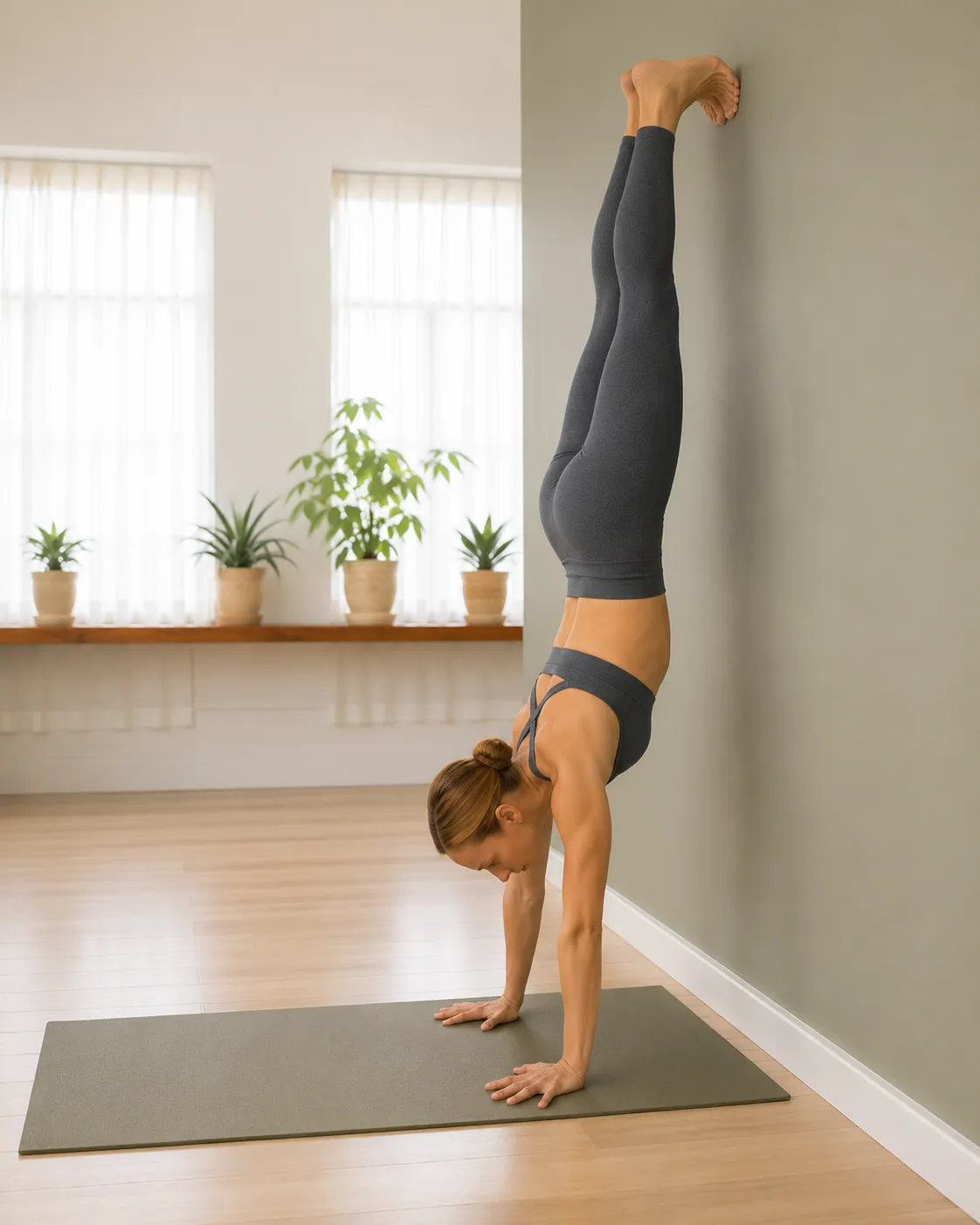
Handstand is the asana that most students aspire to and most never achieve solo. The wall practice can become a stable medium-term home — many practitioners enjoy a 15-second wall handstand without ever attempting free balance. Both are legitimate.
Benefits
- Most demanding inversion in the catalog — full-body strength and balance
- Builds wrist, shoulder, and core conditioning unlike any other pose
- The big inversion: cardiovascular, lymphatic, and confidence effects
- Capstone pose for a strong asana practice
How to practise Handstand
- PREREQUISITE: strong Down Dog, plank, and shoulder stability. Practice at a wall.
- Place the palms on the floor about 6 inches from a wall, shoulder-width apart.
- Walk the feet toward the hands until the hips stack over the shoulders.
- One leg kicks up; the other follows. Heels touch the wall lightly.
- Stack: wrists → shoulders → hips → heels in one vertical line.
- Engage the core, press through the palms, gaze between the hands.
- To exit: lower one leg at a time, slowly back to Down Dog.
Suggested hold: 15s · Breath: Natural
How Handstand affects your doshas
In Ayurveda the same pose lands differently depending on your constitution. This is the lens the app uses to sequence your practice.
| Dosha | Effect | Notes |
|---|---|---|
| Vata | Neutral | broadly neutral |
| Pitta | Neutral | broadly neutral |
| Kapha | Balancing | a good fit — helps settle this dosha |
Balance it off the mat, too
Poses and food are two sides of the same balance. Calm the same dosha on your plate:
Who should avoid or modify this pose
- ADVANCED — practice with a teacher
- Don't practice with wrist, elbow, shoulder, or neck injury
- Skip with carpal tunnel syndrome
- Pregnant women shouldn't practice
- Avoid with high blood pressure, glaucoma, retinal detachment, or vertigo
- Skip during menstruation if heavy inversions feel uncomfortable
If you're pregnant, injured, or managing a condition, check with a qualified teacher or clinician before practising.
Modifications
- Practice at a wall — never solo in the middle of the room before the inversion is stable
- Hold for 3-5 seconds at first, building over weeks
- Build the prerequisites: Pincha Mayurasana (forearm stand), strong handstand at the wall
- Use a spotter for the first many attempts
Traditional source: Modern hatha — Modern advanced inversion. Codified in 20th-century practice; not in HYP Ch. 1.