
Seated · Beginner
Lion Pose
Simhasana·सिंहासन·siṃhāsana
Also called: Lion, Lion Breath
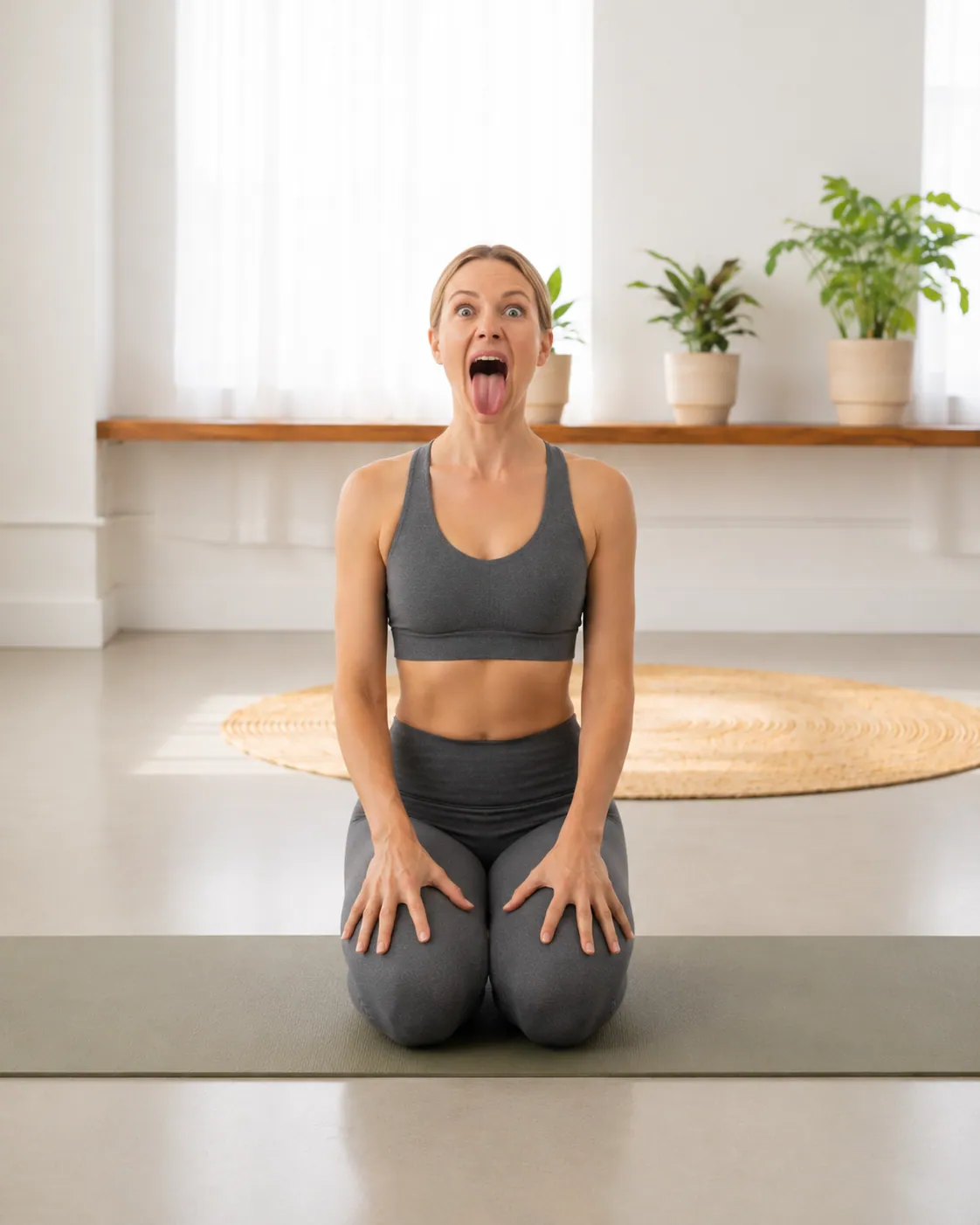
Simhasana is the asana most people are too self-conscious to try in a public class — and that's exactly why it works. The combination of facial expression, tongue extension, and forceful exhale releases tension you didn't know was there. HYP explicitly names this practice; modern lineages sometimes drop the tongue extension to make it less awkward, but the original is most effective.
Benefits
- Releases tension in the jaw, throat, and face — the chronic seat of social-stress holding
- HYP describes it as removing diseases of the throat
- Activates the platysma (neck muscle) and tongue — rarely-trained areas
- Surprisingly emotional — many users find it releases inhibition over time
How to practise Lion Pose
- Kneel on the mat with the knees together, sitting back on the heels (Vajrasana base). OR sit cross-legged.
- Place the palms on the knees, fingers spread wide.
- Inhale deeply through the nose.
- Open the mouth wide, extend the tongue as far down toward the chin as possible.
- Exhale forcefully through the open mouth, making a "HAAAAA" sound from the throat — the lion's roar.
- Widen the eyes — gaze up toward the third eye or down at the tip of the nose.
- Repeat 5-8 rounds. After the last round, close the eyes and rest.
Suggested hold: 60s · Breath: Paced
How Lion Pose affects your doshas
In Ayurveda the same pose lands differently depending on your constitution. This is the lens the app uses to sequence your practice.
| Dosha | Effect | Notes |
|---|---|---|
| Vata | Neutral | broadly neutral |
| Pitta | Caution | can aggravate this dosha — practise sparingly |
| Kapha | Balancing | a good fit — helps settle this dosha |
Balance it off the mat, too
Poses and food are two sides of the same balance. Calm the same dosha on your plate:
Who should avoid or modify this pose
- Skip with severe jaw pain or recent dental surgery
- Avoid with active throat infection or laryngitis
- Pregnant women can practice without strain
- If you have tinnitus or hearing sensitivity, do the roar quietly
If you're pregnant, injured, or managing a condition, check with a qualified teacher or clinician before practising.
Modifications
- Roar quietly if practicing in a shared space
- Skip the tongue extension if it strains the tongue or jaw
- Practice cross-legged if the kneeling base is uncomfortable
- Do fewer rounds initially — 3 rounds builds the comfort to do more
Traditional source: Hatha Yoga Pradipika 1.50-52 — Named in HYP Ch. 1. The text describes the wide-eyed gaze, the tongue extension, and the roaring exhale — explicitly called out as part of the practice.