
Seated · Beginner
Auspicious Seat
Swastikasana·स्वस्तिकासन·svastikāsana
Also called: Lucky Seat
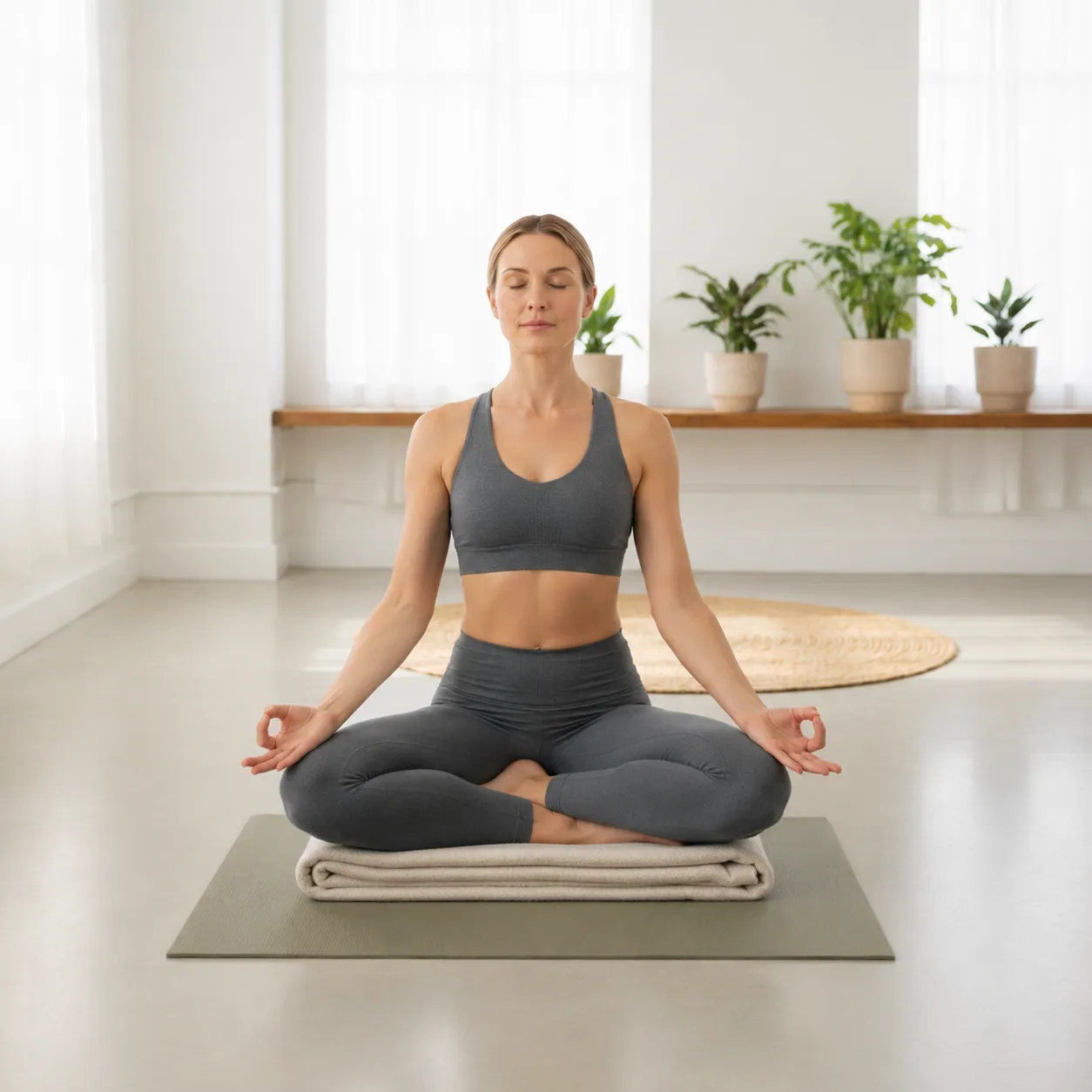
Swastikasana is the easier-than-lotus seated meditation pose that HYP opens its asana chapter with. The interlocked feet make the seat more stable than Sukhasana without demanding the deep hip rotation of Padmasana. Worth practicing if Sukhasana feels wobbly during longer sits.
Benefits
- HYP's first named asana — the original meditation seat
- More structured than Sukhasana; less demanding than Padmasana
- Stable base for breath practice and silent sitting
- Gentle external rotation of the hips opens them over weeks of consistent practice
How to practise Auspicious Seat
- Sit on a folded blanket with the legs extended.
- Bend the right knee and tuck the right foot under the left thigh, close to the body.
- Bend the left knee and tuck the left foot between the right calf and right thigh.
- The legs form a tidy interlock — feet hidden, ankles symmetric.
- Rest the hands on the knees in jnana mudra (thumb and index touching).
- Lengthen the spine — crown reaches up, sit bones root down.
- Soften the jaw, soften the eyes.
Suggested hold: 180s · Breath: Natural
How Auspicious Seat affects your doshas
In Ayurveda the same pose lands differently depending on your constitution. This is the lens the app uses to sequence your practice.
| Dosha | Effect | Notes |
|---|---|---|
| Vata | Balancing | a good fit — helps settle this dosha |
| Pitta | Balancing | a good fit — helps settle this dosha |
| Kapha | Neutral | broadly neutral |
Balance it off the mat, too
Poses and food are two sides of the same balance. Calm the same dosha on your plate:
Who should avoid or modify this pose
- Don't practice with knee or hip injury
- Avoid with severe sciatica
- Pregnant women in late pregnancy may find this uncomfortable — use Sukhasana on a high cushion
If you're pregnant, injured, or managing a condition, check with a qualified teacher or clinician before practising.
Modifications
- Sit on a folded blanket to elevate the hips and reduce knee strain
- Loosen the foot interlock — simple cross-legged Sukhasana is equally valid
- Place a small cushion under each knee if they hover above the floor
Traditional source: Hatha Yoga Pradipika 1.19 — First explicit asana named in HYP Ch. 1. The Sanskrit "svastika" means auspicious; the ancient symbol predates and is unrelated to its 20th-century European appropriation.