
Seated · Intermediate
Lotus Pose
Padmasana·पद्मासन·padmāsana
Also called: Full Lotus
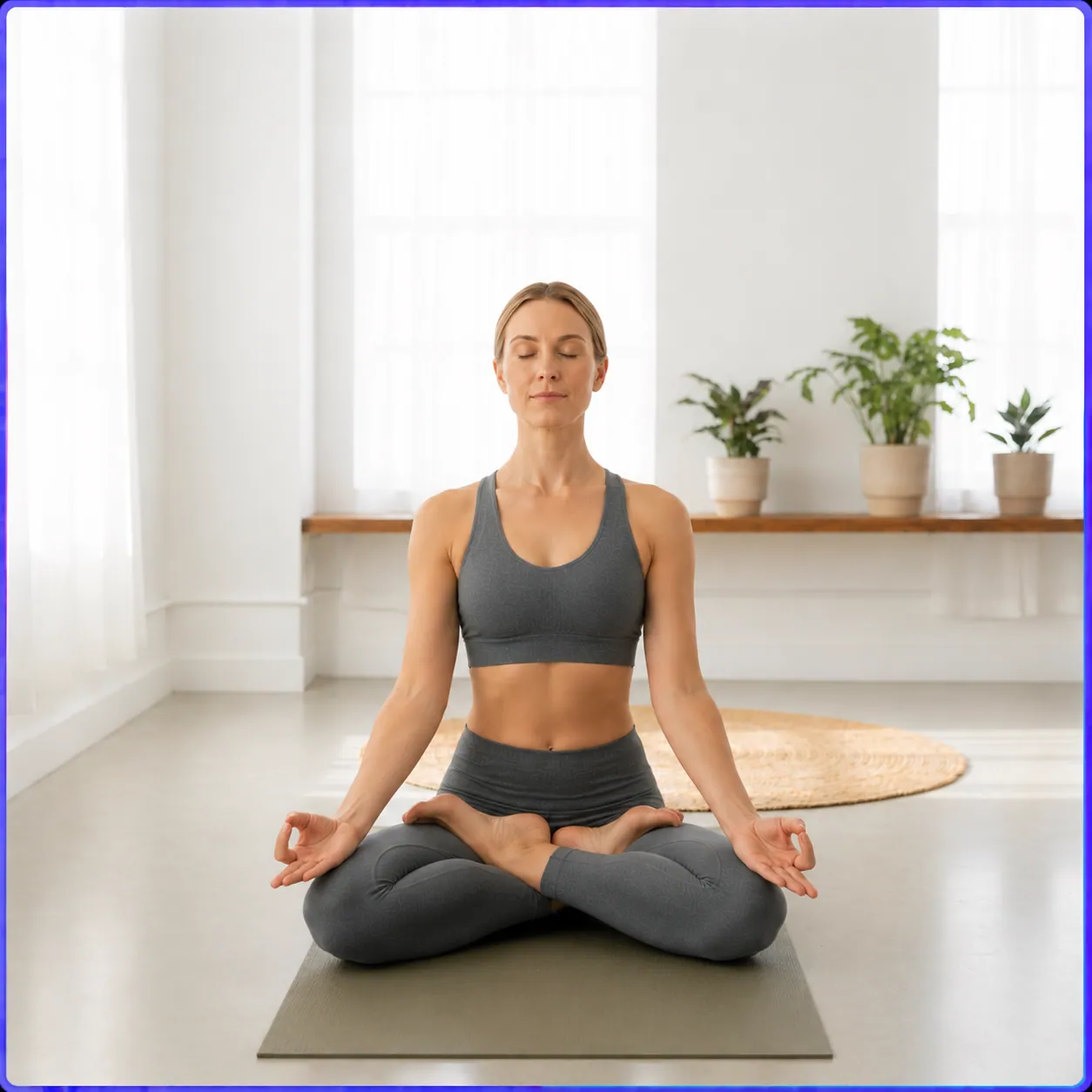
Lotus is a destination pose — not a starting place. the Hatha Yoga Pradipika describes it as the seat that 'destroys all diseases', but reaching it without injury requires patient hip-opening over months or years. If your hips don't allow lotus today, Sukhasana on a cushion is functionally identical for meditation purposes. Don't trade your knees for an Instagram pose.
Benefits
- Establishes the most stable upright seat — sit bones, knees, and one ankle each anchor a corner of a triangle
- Lengthens the spine through structural alignment, not muscular effort
- The classical pranayama and meditation seat described in the Hatha Yoga Pradipika and Patanjali's Yoga Sutras
- Long holds become possible because the lower body is locked — only the spine and breath remain to manage
How to practise Lotus Pose
- WARNING: don't force this pose. If it doesn't come easily, sit in Sukhasana on a cushion instead — your knees will thank you.
- Sit with your legs extended straight in front of you on the floor.
- Bend the right knee. Use your hands to lift the right foot and place it on top of the left thigh, sole facing up.
- Bend the left knee. Lift the left foot and place it on top of the right thigh, sole facing up.
- Both knees should rest on the floor. If either knee floats up, this isn't your pose yet — back off.
- Rest your hands on your knees, palms up.
- Lengthen the spine. The seat should feel stable, not strained.
Suggested hold: 180s · Breath: Natural
How Lotus Pose affects your doshas
In Ayurveda the same pose lands differently depending on your constitution. This is the lens the app uses to sequence your practice.
| Dosha | Effect | Notes |
|---|---|---|
| Vata | Balancing | a good fit — helps settle this dosha |
| Pitta | Balancing | a good fit — helps settle this dosha |
| Kapha | Neutral | broadly neutral |
Balance it off the mat, too
Poses and food are two sides of the same balance. Calm the same dosha on your plate:
Who should avoid or modify this pose
- Don't force this pose. Tight hips will translate the lotus into knee strain — and knees don't recover from that easily
- Skip with any history of knee surgery, meniscus injury, or ACL/MCL injury
- Pregnant women shouldn't practice the full lotus
- Avoid with sciatica or active hip injury
- Don't practice if Sukhasana already strains the knees
If you're pregnant, injured, or managing a condition, check with a qualified teacher or clinician before practising.
Modifications
- Practice Ardha Padmasana (half lotus) — one foot on the thigh, the other under
- Practice Sukhasana with the hips elevated on cushions — same benefits, no knee risk
- Place a folded blanket under the seat to tilt the pelvis forward
- If the lotus is available but uncomfortable, hold for shorter durations and switch leg positions
Traditional source: Hatha Yoga Pradipika 1.44-49 — Named explicitly in the Hatha Yoga Pradipika Ch. 1. Six verses describe its construction and value as a meditation seat.