
Seated · Beginner
Gracious Pose
Bhadrasana·भद्रासन·bhadrāsana
Also called: Throne Pose, Auspicious Pose, Cobbler Pose (modern interpretation)
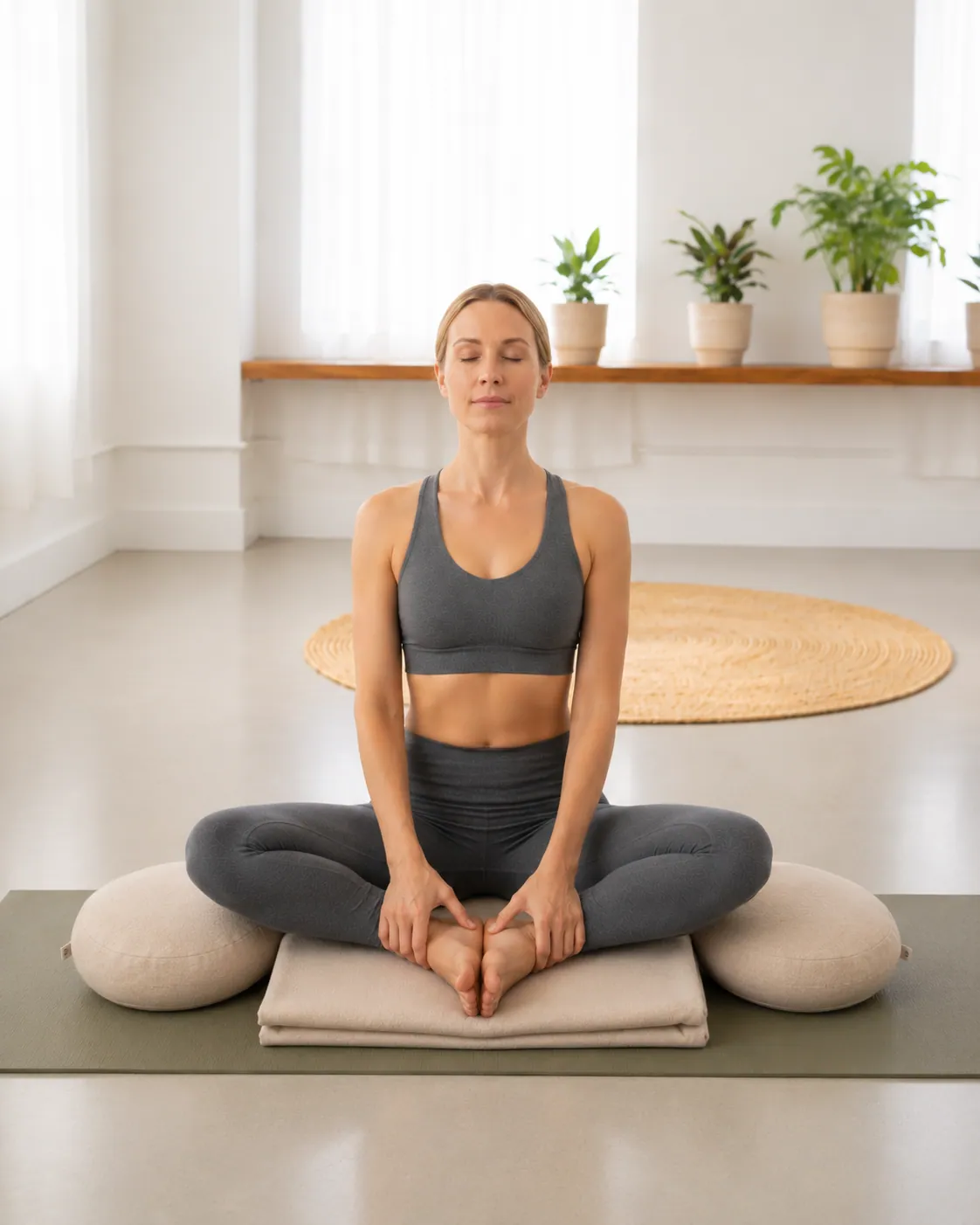
Bhadrasana sits in the cluster of HYP-named meditation seats (Padmasana, Siddhasana, Swastikasana, Bhadrasana) — the four primary postures the text endorses. Modern teaching often uses Baddha Konasana interchangeably; we document them separately to preserve the source-text naming for users who want fidelity.
Benefits
- HYP-named meditation seat — one of the foundational sitting practices
- Opens the hips through external rotation, accessible over time
- Stable and grounding — suitable for long holds
- Connects modern users to one of the original four meditation poses
How to practise Gracious Pose
- Sit on a folded blanket with the legs extended.
- Bring the soles of the feet together and draw the heels close to the perineum.
- Grasp the feet firmly with both hands — fingers wrap around the outer edges.
- The knees release toward the floor, supported by cushions if they hover.
- Lengthen the spine — crown reaches up, sit bones root down.
- Hold gaze either straight ahead or eyes softly closed.
- Stay as long as is comfortable for meditation.
Suggested hold: 180s · Breath: Natural
How Gracious Pose affects your doshas
In Ayurveda the same pose lands differently depending on your constitution. This is the lens the app uses to sequence your practice.
| Dosha | Effect | Notes |
|---|---|---|
| Vata | Balancing | a good fit — helps settle this dosha |
| Pitta | Balancing | a good fit — helps settle this dosha |
| Kapha | Neutral | broadly neutral |
Balance it off the mat, too
Poses and food are two sides of the same balance. Calm the same dosha on your plate:
Who should avoid or modify this pose
- Don't practice with knee or hip injury
- Avoid with severe sciatica
- Pregnant women can practice with the feet further from the body (don't compress the abdomen)
If you're pregnant, injured, or managing a condition, check with a qualified teacher or clinician before practising.
Modifications
- Sit on a folded blanket to elevate the hips
- Place blocks under each knee for support — never force the knees down
- Move the feet further from the body for an easier hip stretch
- If holding the feet strains the lower back, rest the hands on the shins instead
Traditional source: Hatha Yoga Pradipika 1.53-54 — Named in HYP Ch. 1. The text describes it as one of the four primary asanas for meditation. Some modern lineages conflate it with Baddha Konasana; we keep them separate to preserve HYP's distinct naming.